Year: 2015
-
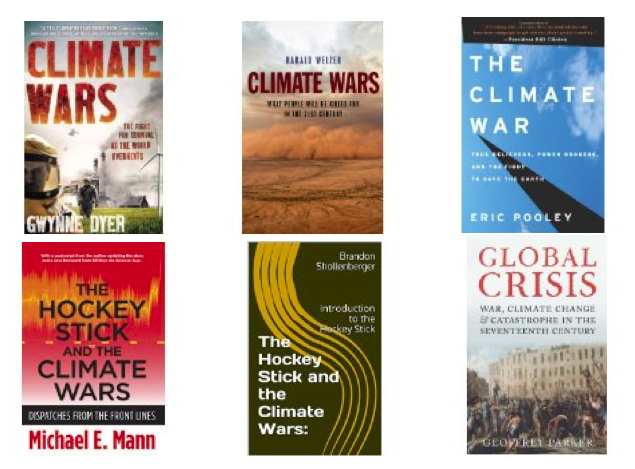
Climate wars
At the end of August Barry Woods asked on Twitter when the phrase ‘climate wars’ was first used and Warren Pearce ‘paged’ me. I was on holiday, so I didn’t have time to properly look into this. I still haven’t got a lot of time, but I have started to dig a bit. When you…
-

Snapshots of the unknown – some holiday souvenirs
On holiday at the English seaside I read two very different books: a popular science book on Aristotle’s biology by Armand Marie Leroi (The Lagoon, 2014) and a novel by Jules Verne about a sea voyage to the North pole (Les Aventures du Capitaine Hatteras, 1864). While reading these books, I also came across an…
-

Infectious futures
On Sunday (9 August) I did something for the first time. I went to a ‘con’ or convention: the Nine Worlds Geekfest 2015. How did this happen? A few months ago, Lydia Nicholas from Nesta approached me with a fascinating project. In collaboration with Joshua Ryan-Saha, the Assistant Manager of the Longitude Prize, she had…
-

Carbon pollution
As a linguist I have been interested in ‘carbon compounds’ for a long time, that is, phrases that combine the word ‘carbon’ with other words to form new units of meaning. Using lexical carbon compounds, we can talk about anything, from ‘carbon awareness’ to ‘carbon zealots’. ‘Carbon pollution’ is one of these compounds which pack…
-

Ants and the art of science communication
Ants have been in the news this week. First there was Jim Al-Khalili’s interview with E. O. Wilson, a world authority on ants, for The Life Scientific. Then there was the announcement that scientists at the University of Cambridge (funded by the BBSRC) have discovered that ants use three types of hair to meticulously clean…
-

Science, hype and fun
In one of my early posts for this blog I talked about hype and about how hype can be used honestly and fraudulently. In one of my later posts I talked about CRISPR and how scientists are trying to deal with this gene editing technology responsibly. So I should have known better! Following the fun…
-

Who is responsible for GM moths?
This is a joint post with Sarah Hartley, Making Science Public Research Fellow What is the role of the public in science? Should public concerns about scientific innovation be taken into account when regulating new technologies? Are some types of concerns more valid than others? These are fundamental questions about the governance of innovation, and the answers…
-

Pluto and pareidolia
As everybody knows by now, New Horizons has been flying past Pluto and has beamed down astonishing images. One of these shows a peach or bronze coloured planetary object with a lighter pattern on the side that I first saw as a ‘heart’. Many others did so too, including NASA (it will now name this…
-

Joining the dots: Pluto, Kant and the nature of scientific knowledge
In his Critique of Practical Reason (1788) Immanuel Kant wrote these most beautiful words: “Two things fill the mind with ever new and increasing admiration and reverence, the more often and steadily one reflects on them: the starry heavens above me and the moral law within me. I do not need to search for them…
-

Ash dieback (Chalara), free trade, and the technocracy of biosecurity
This is a post by Judith Tsouvalis, one of the research fellows on the Making Science Public team. In March 2012, tree and plant health became a matter of national concern in Britain following the discovery of an East Asian fungus called Hymenoscyphus fraxineus at a nursery in Buckinghamshire, England. The ash saplings infected by…
 Making Science Public