Year: 2021
-

Eyes and organoids
I have written in the past about eyes and about organoids (but if you really want to know more about organoids, you should read Philip Ball’s How to Grow a Human). These two topics, eyes and organoids, recently came together. A few days ago, I saw tweets like this: “Small blobs of human brain grown…
-

From RRI to RBM: How gene drive drives new efforts in engagement
The other day, I was listening to the very interesting history of genetic engineering, including gene editing and gene drive, as told by Matthew Cobb in his three-part radio series: Genetic dreams, genetic nightmares. This reminded me that I hadn’t thought or written about gene drive for a while, one of the most controversial genetic…
-

Covid, cowering and cowardice
We all remember Boris Johnson saying in March 2020 that we should take covid on the chin, followed by him saying in April that year that Covid was an invisible mugger that one should wrestle to the floor. This metaphorical framing of the virus as a physical assailant and of those having to deal with…
-

When climate change hits home: A personal story
This month, Alice Bell has published an important book entitled Our Biggest Experiment: A History of the Climate Crisis. In it, she takes us “back to climate change science’s earliest steps in the eighteenth and nineteenth centuries, through the point when concern started to rise in the 1950s and right up to today, where the…
-

Walls and covid
A few weeks ago, I wrote a brief blog post about the wall metaphor used during the pandemic. I approved of it, as it highlighted community action: the more individuals get vaccinated, the more protection there is for everybody – one brick doesn’t make a wall, but many do. The metaphor is now being used…
-
Coronavirus and mental health: Risks, protective factors and care
This is a guest post by Dr Rusi Jaspal who is Professor of Psychology at Nottingham Trent University in the UK. E-mail: rusi.jaspal@ntu.ac.uk Twitter: @ProfRJaspal *** For several years, my colleagues and I have studied the effects of major social change on people’s sense of identity and psychological wellbeing. We have done so primarily through…
-

Covid, consensus and conspiracy: Mapping a change in narrative
I have written about the concept of consensus before, in the context of climate change. Now it’s time to write a few words on how consensus is used as a concept in the context of covid, or more precisely, in the debate about the origins of the coronavirus. The emerging literature surrounding this origin story…
-
Maps, books and jigsaws: The human genome is back
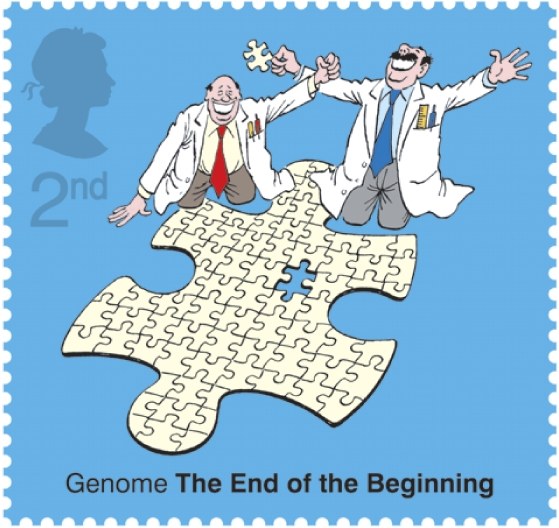
I was recently messing about on the news database Nexis when I came across this pronouncement from 1982!! “Weissmann appealed directly to the delegates for an international basic-research fund to determine how genes function and their relationship to disease. With current technology, he declared, mapping the entire human genome would require some 50,000 man-years and…
-

From ‘deadly enemy’ to ‘covidiots’: Words matter when talking about COVID-19
This article, by Ruth Derksen, is republished from The Conversation under a Creative Commons license. Read the original article here. I thought it would make a great addition to the covid collection on ‘Making Science Public’ and I am grateful to Ruth for her permission to republish it. Dr. Ruth Derksen is a Senior Instructor …
-

From stigma to sigma? The covid variant naming conundrum continues
On 31 May the World Health Organisation tweeted: “Today WHO has announced a new naming system for key #COVID19 variants. The labels are based on the Greek alphabet (i.e. Alpha, Beta, Gamma, etc), making them simple, easy to say and remember.” In her retweet of that tweet Alice Roberts said “…delta, epsilon, zeta, eta, theta,…
 Making Science Public