Category: images and visualisations
-

Francis Willughby and me
You have probably all heard of Newton or Halley or Hooke or Pepys … But have you heard of Willughby? I had, vaguely, but I did not look hard enough. They were all early members of the Royal Society (founded in 1660) and involved in a little scandal to which I’ll come later. But first…
-

How the pandemic is shaping worldviews
This is a guest post by Ahmed Abdel-Raheem. Ahmed is a postdoc in linguistics at the University of Bremen, Germany, and former Assistant Professor at the Department of English Studies at Maria Curie-Skłodowska University in Lublin, Poland. He is the author of Pictorial Framing in Moral Politics: A Corpus-Based Experimental Study (Routledge, 2019). *** It is…
-
![Notes on color [colour] of protein spikes on COVID-19 virus](https://makingsciencepublic.com/wp-content/uploads/2025/07/09d05-cdc-coronavirus.jpg?w=720)
Notes on color [colour] of protein spikes on COVID-19 virus
This is a quick guest note by Chris Toumey (6 July 2020) When the COVID-19 corona virus began to be depicted visually in early 2020, its protein spikes (which give it a semblance of a crown) were always colored red. This puzzled me, and I explored it by putting together several sources of information. From…
-
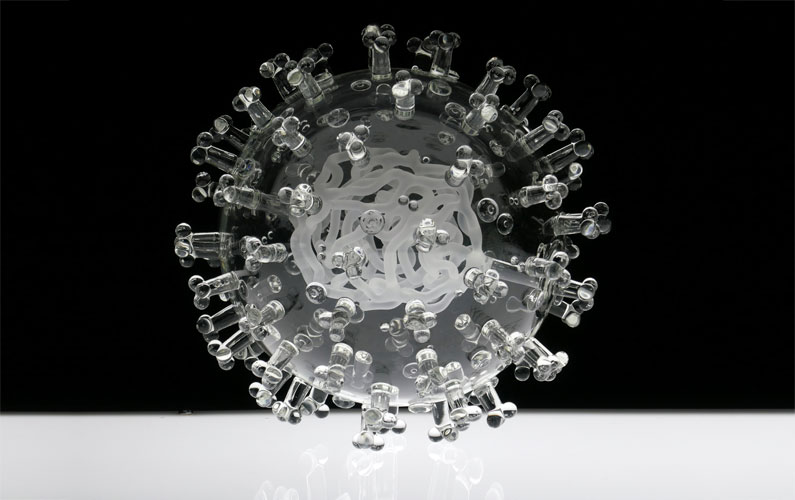
Images in the time of coronavirus
This post has been inspired by conversations with friends and colleagues on the SCIREPS list, particularly David and Dolores Steinman, Martin Kemp, Pascale Pollier and Roberta Buiani. Added, 10 July, 2020. There are now many more studies of images. Two in particular stand out about images of the virus. One by Rebekah Frumkin for the…
-

Mathematical models, political decision making and public perceptions
On Tuesday, 3 March, Boris Johnson revealed the government’s action plan on how to deal with the novel coronavirus and the spread of Covid-19. Despite doubts about the usefulness of experts expressed some years ago by some of his colleagues, he was flanked by experts, namely Sir Patrick Vallance, the Government Chief Scientific Adviser, and…
-

Epi-pins: Epigenetics on Pinterest
This post has been co-authored with Cath Ennis, University of British Colombia, Vancouver (author of Epigenetics: A Graphic Guide). Cath is a Knowledge Translation Specialist with the University of British Columbia’s Human Early Learning Partnership and the Kobor Lab at BC Children’s Hospital Research Institute. *** Cath and I are interested in how epigenetics is…
-

Making the transgenerational epigenetic inheritance of trauma real
This post has been co-authored with Aleksandra Stelmach and Alan Miguel Valdez *** Transgenerational epigenetic inheritance (TEI) is a contested hypothesis within the complex field of epigenetics. The guess is that there are molecular mechanisms (‘beyond the gene’) through which social, cultural and physical experiences impact the human body and are transmitted to future generations.…
-

Metaphors, machines and the meaning of life
Machine metaphors are ubiquitous in biology, nowhere more so than in synthetic biology, a type of biology that is inspired by engineering and design. This has attracted the attention of metaphor analysts, but also of philosophers and ethicists. Various scholars, both from the humanities/social sciences and the life sciences have grappled with some of the…
-

The vertical rod in the center of the DNA molecule
A while ago I read this tweet by Kindra Crick: “Odile Crick, my grandmother, drew the first published diagram of #DNA It was 65 years ago #onthisday, as a diagram in the first of the three papers published in @nature on the structure of DNA. (Watson & Crick, Wilkins et al, Franklin & Gosling) #SciArt…
-

Signs and society: The Brexit bus
Some years ago, Roda Madziva, a former research fellow on the Making Science Public programme, wrote a blog post about the ‘Go Home Van’. This van combined visibility and mobility to tell migrants in London, framed as illegal criminals, to go home – wherever that might (im)possibly be. Roda and Vivienne Lowndes have also written an…
 Making Science Public