Category: Language
-

The ‘Making Science Public’ blog: What is it for?
Our ‘Making Science Public’ blog puzzles some readers, and perhaps rightly so. One blogger in particular pointed out recently that he found what we are doing ‘confusing’. This confusion emerged in particular in the context of us posting some guest-posts on climate science and climate politics (and climate scepticism) and also in the context of…
-
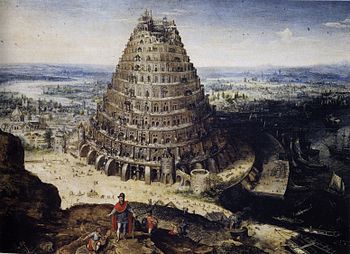
The language of knowledge: A new tower of Babel?
For some time I have been intrigued by the word ‘knowledge’. The more I hear it being used, the less I understand its meaning. The confusion increases with every ‘compound’ use that I come across (in linguistics a ‘compound’ refers to a combination of two or more words). Most recently I came across the compound…
-

Abseiling down the climate cliff metaphor
Since its very beginning in the 1980s, public discourse about climate change has been structured by metaphors. We had the greenhouse effect, the carbon footprint, the hockey stick, the tipping point, and we also had climategate; and to these metaphors we can now add the ‘climate cliff’ (which one can almost see as an upside…
-
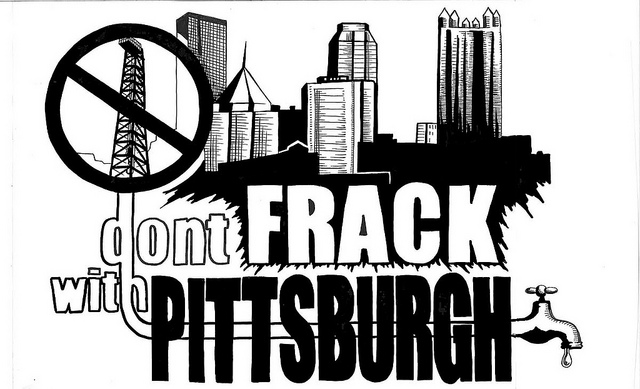
The Threat of Fracking: Real or Constructed?
Guest post by Dr. Rusi Jaspal, Research Fellow on the ESRC’s Climate Change as a Complex Social Issue programme in the School of Sociology & Social Policy. (This post can be read in conjunction with Rusi’s 2014 article in The Conversation) Global energy consumption is likely to rise significantly over the next two decades with…
-

Taking charge of the apocalypse: On serendipity, walruses and last men
A week ago somebody sent me this YouTube video of a walrus that makes noises on command. I sent it on to a few people, including my sister. She sent me back a picture of a sea lion taken while on holiday in Alaska, which I have used as the featured image for this blog.…
-

Making science public: The issue of language (jargon)
This is a guest blog by Gregory Hollin, a PhD student at the Institute for Science and Society (School of Sociology and Social Policy) Over recent days there has been a fascinating blog-based debate of great interest to the Making Science Public agenda. This debate focused on the nature of writing in the natural and…
-
Metaphors in science and society
I recently had an interesting twitter conversation with Alex Brown, Peter Broks, Bev Gibbs, Angela Cassidy and Sophia Collins about some outdated metaphors for the spread of knowledge and for science communication, for example as transmission or transporting of ideas from one head to another and so on. I also read two interesting blog posts…
-

GM food, war metaphors and the perils of political entrenchment
It’s the Jubilee weekend. It’s raining. So I am looking through some tweets. Some make me think I should cheer myself up by writing a blog about songs used to make science (especially quantum physics!) public, others make me think that I really should write something about war metaphors in the current GM debate. As…
-

Making neuroscience public: Neurohype, neuroscepticism and neuroblogging
There has been a lot of debate recently about climate scepticism and climate sceptics. To define what climate sceptics are is actually quite difficult, but some may be described as (anthropogenic) climate (change) deniers, some as climate change doubters, some as critical observers of climate science, some as just sitting on the fence. There are…
-

Exploring the language of impact
I recently collected a few indicative phrases around ‘impact’, one of the pillars of the Research Excellence Framework. In one email a colleague asked me “Can we call that impact?” (400 hits on facebook linked to a TV interview linked to a still speculative health improvement measure). A tweet announced: “That’s what I call impact”,…
 Making Science Public