Category: Metaphors
-

When is a metaphor not a metaphor?
A few weeks ago Daniel Nicholson posted an article on twitter entitled “Are cells really machines?” This made me think, and I wrote a blog post pondering the relations between science, metaphors and technology. In this post I want to reflect on another aspect of the relation between science and metaphors, namely on when metaphors…
-

The history of biology and the joys of blogging
For the first time in my life and after the end of my official academic career, I’ll be co-presenting a paper at the International Society for the History, Philosophy and Social Studies of Biology conference, which is taking place this year in Oslo, from July 7-12. I’ll only be co-presenting and I won’t be there…
-

Metaphors, machines and the meaning of life
Machine metaphors are ubiquitous in biology, nowhere more so than in synthetic biology, a type of biology that is inspired by engineering and design. This has attracted the attention of metaphor analysts, but also of philosophers and ethicists. Various scholars, both from the humanities/social sciences and the life sciences have grappled with some of the…
-

Talking about gene drive
In 2019 I became a co-investigator on a project led by Dr Sarah Hartley at the University of Exeter. The project was funded by The Wellcome Trust and was called: “Talking about gene drive: An exploration of language to enable understanding and deliberation in Africa, Europe, North America and Australasia”. The team The international team…
-

New genetics and society: A retrospective
I am in a collecting mood at the moment [I have updated this collection/blog post on 17 January 2022 and on 8 October 2024]. When I heard that an article (with Carmen McLeod and Rusi Jaspal) on faecal microbial transplants had finally been accepted by New Genetics and Society, I began to count back and…
-

Witness marks: On the trail of an epigenetic metaphor
This is a guest post by Aleksandra Stelmach, University of Nottingham, Institute for Science and Society In a previous post Brigitte Nerlich and I briefly discussed the emergence of a seemingly new metaphor used in popular discussion about epigenetic effects of nutrition on offspring and, potentially, future generations. In this post I try to track…
-

Epigenetics in popular culture: The case of turkey dinosaurs
This post has been written in collaboration with Aleksandra Stelmach *** On the 5th of May Charlotte Church asked a question in the Guardian that probably many parents ask themselves in these epigenetically informed times: “Will the turkey dinosaurs I ate as a kid affect my children’s health?” On twitter, experts answered that question with…
-

Science and poetry: Effing the ineffable
A couple of weeks ago, Phil Moriarty sent me a poem and a piece of music about (un)certainty ahead of an afternoon of science and poetry on 29 April here at the University of Nottingham. Travelling through cultures This made me think about science and literature, a topic of endless fascination about which countless people…
-

It’s an icon, it’s a symbol: It’s a polar bear!?
A while ago Saffron O’Neill asked me whether one should call polar bear images a climate change synecdoche or a climate change metonym? That was a good question and I should know the answer! Indeed she asked me because she thought I was an expert on that sort of stuff! I have written about metaphors. I…
-
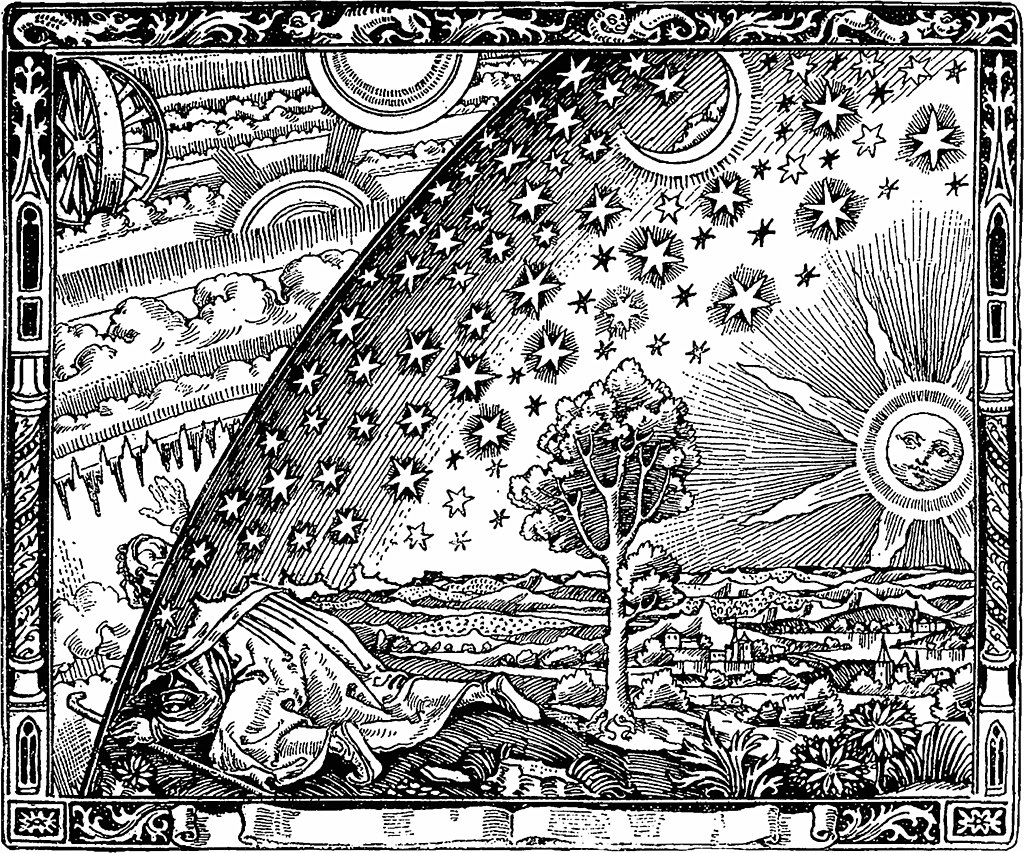
Science and Metaphors
Today I gave a lecture on responsible innovation and responsible language use (via Skype) to biochem and synbio students at the University of Oxford. After the lecture, one student asked whether there was a good go-to book on science and metaphor. I hummed and hawed…. There is of course some stuff, but not a really…
 Making Science Public