Category: Metaphors
-

Data harvesting: A metaphor ripe for scrutiny
At the end of March news of a data scandal broke – you all know which one. As Steven Poole in The Guardian wrote: “The political data firm Cambridge Analytica has been accused of unauthorised ‘data harvesting’ from millions of Facebook accounts. This handily avoids allegations of ‘theft’ or even just ‘mining’”. Data harvesting is not only…
-

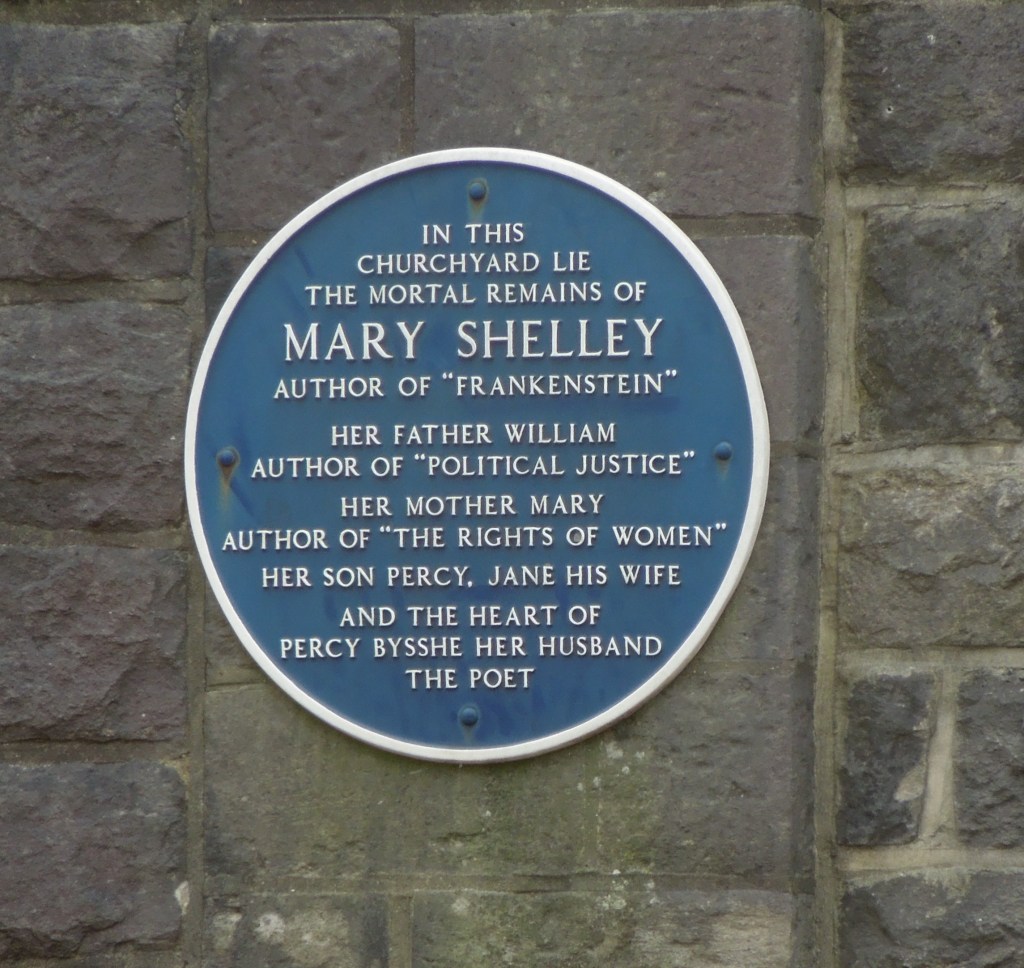
In the shadow of Frankenstein: Mapping and manipulating genes and genomes
I was starting to prepare a talk for Pint of Science in May, for “The Body” strand, which this year here in Nottingham focuses on regenerative medicine and genetic engineering. It’s entitled “GMYou”. I know, it’s a long way off, but they needed a title and so I began to muse. In the end I…
-

Catching a metaphor on the fly: ‘Greenfield genome design’
A week ago, something interesting washed up in my twitter stream, something a metaphor collector like me had to pick up and inspect. Andrew Hanson, an expert in metabolic engineering working at the University Florida, tweeted: “Excellent short 2016 piece from @claudiaevickers on #synbio platforms & the future of the microbial cell factory industry. Coins…
-

Framing cloning: Dolly and the monkeys
In 1999, three years after Dolly the sheep was born, we published an article on the way that cloning was then framed in the public sphere (see also Holliman, 2004). The cloning of two macaque monkeys by Chinese researchers (Cell, 2018), more than two decades after the cloning of Dolly might be a good opportunity…
-
Social, cultural and ethical aspects of synthetic biology: A scientist’s perspective
When you go to the website of the Dymond Research Group at the University of Brighton, you see article titles like this “Lipid Spontaneous Curvatures Estimated from Temperature-Dependent Changes in Inverse Hexagonal Phase Lattice Parameters: Effects of Metal Cations”. That probably means something to experts in the field. It doesn’t mean a lot to me.…
-
Genome editing: Invisible mending
Last week I had a few days in Oxford to visit old haunts, such as the Ashmolean, the Museum of Natural History and the Pitt Rivers Museum. I also went to a little exhibition in the basement of the Museum of the History of Science. The exhibition by Anna Dumitriu was entitled BioArt and Bacteria.…
-

Genome editing, metaphors and language choices
Genetic Alliance and the Progress Educational Trust recently published a report entitled ‘’Basic understanding of genome editing”, based on research supported by the Wellcome Trust. As I have worked on metaphors relating to genetic, genomics and genome editing for more than twenty years, I was particularly interested in this report. Unlike many other publications, including…
-

Science and metaphor: Some historical perspectives
Over the last thirty years or so I have written about metaphor and its importance to language, thought and social interaction. In the last fifteen years, I have focused in on the relation between metaphor and science, especially science communication. However, only recently has it dawned on me how little I actually understand about metaphor…
-

Base editing, biological complexity and the limits of metaphorical explanation
Gene editing has been in the news since around 2013. Here I want to focus on one of the most recent advances which made me question my own understanding of gene editing. In 2015 a team of scientists led by Junjiu Huang at Sun Yet-Sen University in Guangzhou, China, used gene editing techniques, in this…
-

Metaphors for many goals: Discussing research in interactional settings
This is a guest post by Rony Armon, a Research Assistant at the School of Education, Communication and Society King’s College London, specialising in Communication and Media, Qualitative Social Research, and History of Science. *** In a recent post Brigitte Nerlich reviewed some studies that seemed to suggest that even though metaphors are rampant in scientific discourse…
 Making Science Public