Category: Uncategorized
-
Making science public: A question of colour
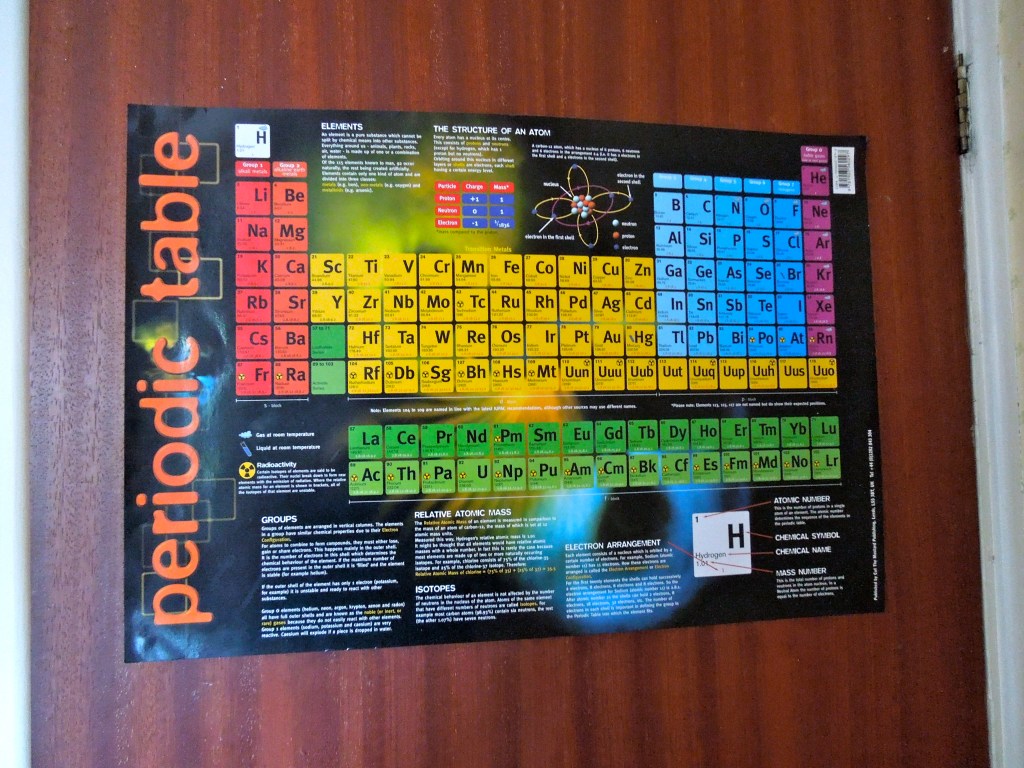
Yesterday I was staring at a poster of the periodic table hanging on our kitchen door, a remnant of my son’s school days. I began to muse; imagine it was just a black and white series of elements and numbers, as it was when it was first invented? Who decided to colour it in, and…
-

The values of science as a cultural institution
In the context of discussions about a controversial essay by Steven Pinker, entitled ‘Science is not your enemy‘, I came across a blog post by Jon Brock which mentioned two blooklets that were new to me. They were written by the famous scientist and science communicator Jacob Bronowski. One was The Common Sense of Science…
-
Perform or perish? Guilty confessions of a YouTube physicist
This post by Philip Moriarity was first published in physicsfocus on 9 August, 2013 and has been reposted here with the author’s permission. This week is YouTube’s Geek Week so it seems a particularly (in)opportune moment to come clean about some niggling doubts I’ve been having of late about physics education/edutainment on the web. Before…
-

The ‘Making Science Public’ blog: What is it for?
Our ‘Making Science Public’ blog puzzles some readers, and perhaps rightly so. One blogger in particular pointed out recently that he found what we are doing ‘confusing’. This confusion emerged in particular in the context of us posting some guest-posts on climate science and climate politics (and climate scepticism) and also in the context of…
-

The little-known secret of “not-doing”
Guest post by our visiting fellow, Jeff Tamblyn, film maker and director of Kansas vs. Darwin. The campus itself might have been what drew me to the MayFest Grounds Tour at the University of Nottingham – it’s vast, sweeping, and dotted with stately buildings and huge trees, many of which are more than three centuries old.…
-

Science communication: From filling deficits to appreciating assets
I recently read a blog post on science communication by John Timmer and a response to this post by Peter Broks, which made me think about (a) the public understanding of the ‘deficit model’ and (b) how one can get from saying science communication should be engaging in the ‘co-creation’ of meaning (Broks) to giving…
-
Making Science Public: A one-year anthology of blog posts
In spring 2012 we began work on a five-year research programme funded by the Leverhulme Trust entitled ‘Making Science Public: Challenges and Opportunities’ (2012-2017). The programme deals with all aspects of ‘making science public’, but in particular with controversies around science, politics, publics and participation. As part of the programme, we began writing a blog…
-

More Thoughts on Citizens and Publics….
Last month Sciencewise-ERC published a report we’ve been working on this year, with input from Sciencewise and some other members of the policy and academic communities. “Which Publics? When?” (pdf) teases out and explores the policy potential of involving different kinds of publics in processes of public dialogue around science and technology. This post doesn’t…
-

It might not be cricket, but it is cricket
The first test match of the 2013 series between England and Australia was, undoubtedly, a great match and a credit to the players of both teams. From my perspective as part of the Making Science Public programme, however, it was also interesting for the role that technology played in the controversy and excitement of the…
-
Public, publics and citizen: What do these words mean?
Sciencewise has published a paper ‘Which Publics? When?’ by my Making Science Public colleagues Alison Mohr, Sujatha Raman and Beverley Gibbs, which has already provoked some blog responses. One blog by Sciencewise Executive Chair Roland Jackson has given it a very positive reception but mentions “a nagging feeling that this word ‘public’ is part of…
 Making Science Public