Category: Uncategorized
-

Promoting Socially Irresponsible Research and Innovation?: That National Academy of Sciences tweet on genome editing and human enhancement
This is a guest post by Michael Morrison, PI on the ESRC BioModifying Technologies project at the Centre for Health, Law and Emerging Technologies (HeLEX), Faculty of Law, University of Oxford *** On the 30th September 2019 the Twitter account of the US National Academy of Sciences (@theNASciences) published the following tweet: “Dream of being…
-

Metaphors, machines and the meaning of life
Machine metaphors are ubiquitous in biology, nowhere more so than in synthetic biology, a type of biology that is inspired by engineering and design. This has attracted the attention of metaphor analysts, but also of philosophers and ethicists. Various scholars, both from the humanities/social sciences and the life sciences have grappled with some of the…
-

Threads, worms and science communication
I thought I had written my last post about epigenetics. But then came along some ‘worms’ and I had to write another one. I have written about worms once before on the Making Science Public blog, in the context of science communication. And this blog post too will reflect on worms in the context of…
-

Epigenetics: A blogging retrospective
Looking back over my blog posts, I realised that I have written 15 posts on epigenetics between 2013 and now (some with Aleksandra Stelmach). It’s time to take stock. Epigenetics is the latest in a long line of developments in genetics and genomics that I have studied through the lens of metaphor analysis, from cloning…
-

Comments on qualitative methods in the humanities and social sciences
I while ago Chris Toumey (Toumey@mailbox.sc.edu) wrote a guest post for this blog, announcing his new book on nanotech and the humanities. A reader had a question that Chris didn’t have time to answer at the time. This post is an answer to that question. *** Regarding my book on nanotechnology, Nanotech and the Humanities,…
-
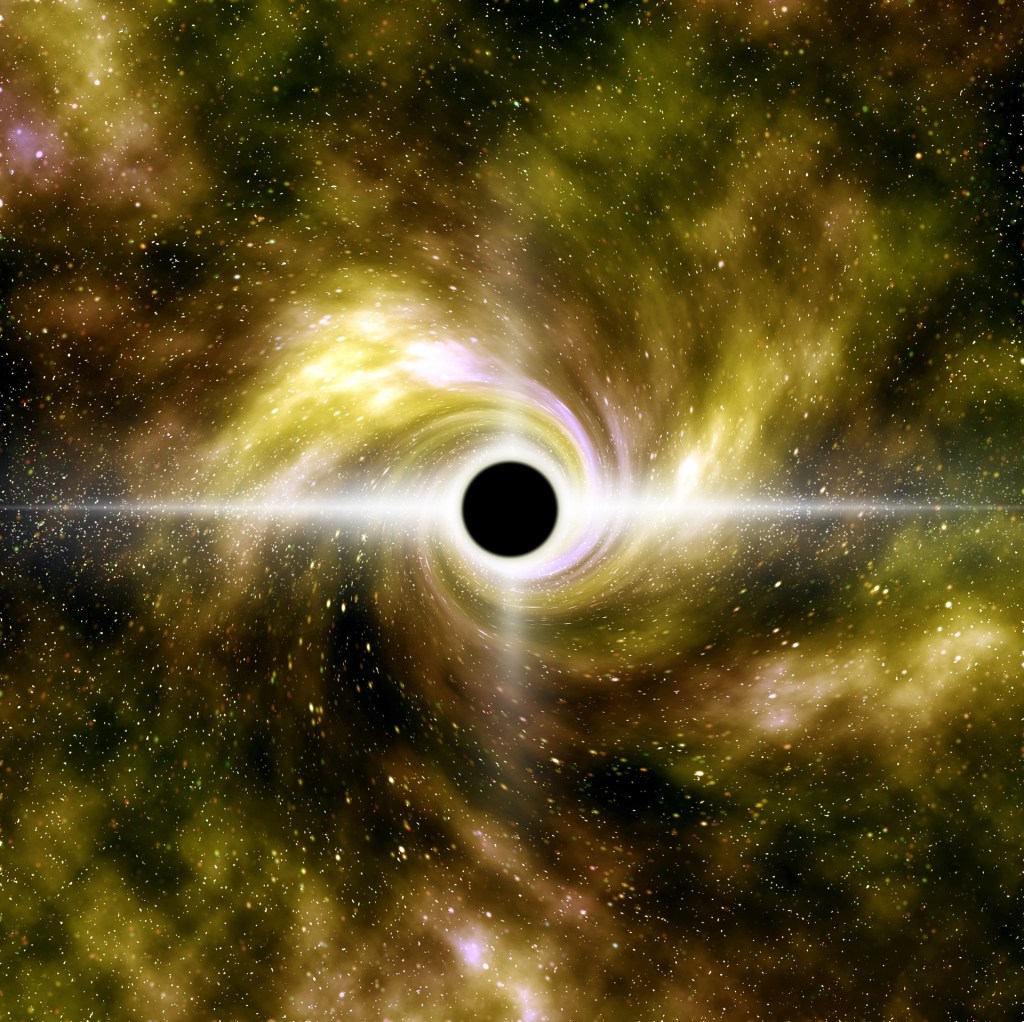
Looking on the bright side: Black holes
Here we go again. The world down here on earth is in dire straights, what with climate change and politics and all that. BUT there is something to be proud about. Scientists have managed to capture the first ever image of a black hole. This was achieved, not through people stamping their feet or ignoring…
-
Epigenetics: Between fundamental science and fantastic expectations
One of my heroines in the field of epigenetics is Edith Heard. In this post I will tell you what I learned from her over the years with regard to epigenetic facts and fantasies. (For a good overview of facts and fantasies, watch this video at ‘Cracked Science’). Before I do that, you might want…
-

Scientists call for a moratorium on heritable genome editing. What do they want?
This is a guest post by Jim Dratwa and Barbara Prainsack. Jim Dratwa, Woodrow Wilson Center, Washington, D.C., and Free University of Brussels’ Centre on Law, Science, Technology & Society. e: jim.dratwa@vub.ac.be Barbara Prainsack, Department of Political Science, University of Vienna, AT and Department of Global Health & Social Medicine, King’s College London, UK. e:…
-

CRISPR culture
CRISPR is a way of changing and replacing parts of DNA using enzymes like a pair of molecular scissors (of course things are more complex than this!). This new technology for ‘editing’ DNA, genes or genomes began to attract public attention between around 2012 and 2015. When I started to write about metaphors used to…
-

From epigenetic landscapes to epigenetic pancakes
As somebody interested in metaphor, art and science, I was just starting to read Susan Merrill Squier’s book Epigenetic Landscapes: Drawings as metaphor (2017) (I am grateful to Cath Ennis for sending me this book), when Aleksandra Stelmach alerted me to a blog post entitled “Epigenetic Pancakes”. It was therefore inevitable that I should write…
 Making Science Public