Category: Uncategorized
-
Biology and sociology: estrangement and entanglement
Ever since my PhD, I have been fascinated by the interplay, interrelations, mutual inspirations, struggle and strife between various disciplines that began to establish themselves during the 19th century, such as linguistics (which became the focus of my research), sociology, biology and so on. In recent years, a little flood of literature has emerged that…
-

Collision, collaboration and communication
The other day I read an article on why academics are losing relevance in society. I noticed that it contained a picture of a celebratory cake with the inscription “Here’s to the first direct detection of gravitational waves” (after two black holes collided). This event happened in 2016 and was widely celebrated around the world,…
-

Social scientist needed to collaborate with synthetic biologists!
It’s that time of year again when we send out a call to undergraduates to become part of an exciting team adventure that ends in a big jamboree in Boston in November 2018 (see featured image). We especially need a social science undergraduate to take part (law, sociology, politics, etc.), with an interest in interdisciplinary…
-

Turning bacteria into passwords
A few days ago, I had the pleasure to meet two enthusiastic members of the first Nottingham iGEM team: Vikram Chhapwale, who specialises in computer science and AI, and Chris Graham, an emerging expert in biochemistry and genetics. Both are undergraduates studying at the University of Nottingham. Chris and Vikram are part of a seven-member…
-

Making lasers public: The European X-ray Free Electron Laser
Last weekend, my mum phoned me from Germany to tell me about the new x-ray laser inaugurated in Hamburg (as I later learned this is the European X-ray Free Electron Laser or XFEL) and asked me whether I had heard about it and whether I could explain what it did. I hadn’t and I couldn’t.…
-
Putting the colour into 3D printing with atoms
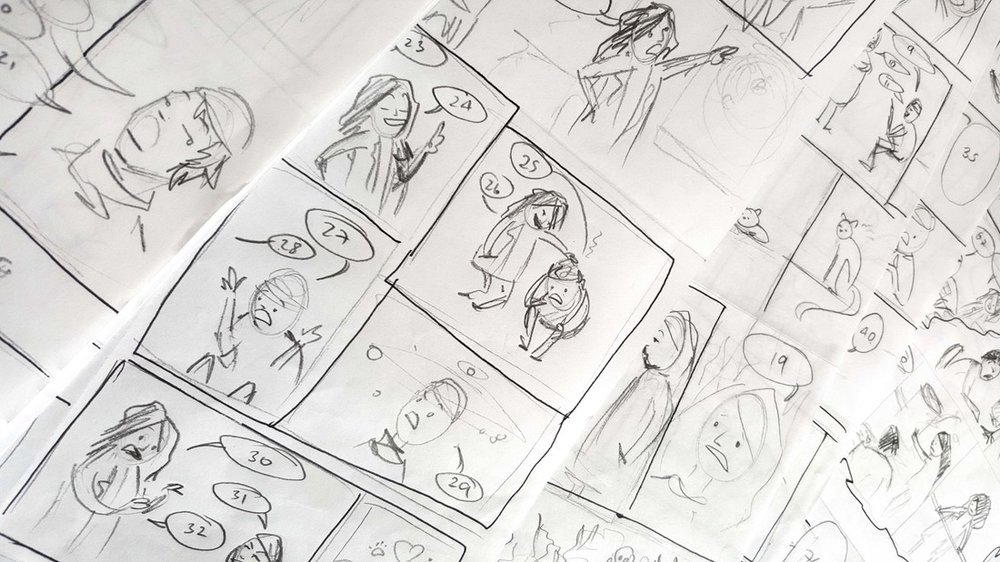
A while ago Phil Moriarty and I started a project, namely, commissioning a graphic novel to make public an EPSRC funded project on 3D printing with atoms. I have written two posts about this here and here and Phil has also talked about this here. Progress has been a bit slow because university bureaucracy put…
-

Milton and Galileo: Affinities between art and science
I don’t know much about John Milton and Galileo Galilei. However, I have stood beside Milton’s Mulberry tree at Christ’s College, Cambridge and beside Galileo’s chair and lectern at the University of Padua – and felt some affinity with the poet and the scientist. I didn’t know though that there was actually a connection between Milton…
-

Making science popular: Science communication in 19th-century France
Some weeks ago I saw a tweet in my timeline which contained an engraving of an iguanodon skeleton. The skeleton had been exhibited in Brussels and its picture appeared in the 1883* issue of the French popular science magazine La Science Illustrée. This made me think of an old blog post of mine entitled “Making Science Picturesque”, where…
-

False balance
Last week an appearance by Lord Lawson on the BBC Radio 4 Today programme caused somewhat of a stir. This was not the first time this had happened. The same happened in 2014. In both instances the BBC invited Lord Lawson to talk about climate change. In both cases this was greeted with a chorus…
-

Jupiter’s Great Red Spot: Puzzles, pictures and participation
Creating new knowledge and reducing ignorance are two basic human needs. Science can help here, if we give it the freedom to do so and don’t chain it like Sisyphus to the rock of industrial production. Space missions are perhaps the prototype of humanity’s quest for knowledge, replacing more earth-bound adventures, expeditions and explorations, such as those undertaken by Alexander…
 Making Science Public