Tag: visualisation
-

Open Day: Planning, talking and inking
This is a re-post from Charli Vince’s blog. It continues the story of ‘Open Day’, a graphic novel about 3D printing with atoms and university life. You can read about how Open Day came to be and how it has been developing here. *** Open Day has been chugging along since the project began many,…
-

Phage and fiction
We have known about bacteriophages for over a century. I myself became vaguely aware of them around 2004 when I started to be interested in bacteria and antimicrobial resistance and later on when my mother had Clostridium difficile, a health-care associated infection related to antibiotic use. However, I never actually looked more closely at phages until Carmen…
-

The vertical rod in the center of the DNA molecule
A while ago I read this tweet by Kindra Crick: “Odile Crick, my grandmother, drew the first published diagram of #DNA It was 65 years ago #onthisday, as a diagram in the first of the three papers published in @nature on the structure of DNA. (Watson & Crick, Wilkins et al, Franklin & Gosling) #SciArt…
-

The microbiome: Images and visualisations
On Monday 26 June I went to Oxford to participate in a workshop on the microbiome organised by The Oxford Interdisciplinary Microbiome Project (IMP). This was what one might call a meta-workshop. Its aim was to find questions that social scientists can sensibly ask about the microbiome, or in the words of the organisers, this…
-
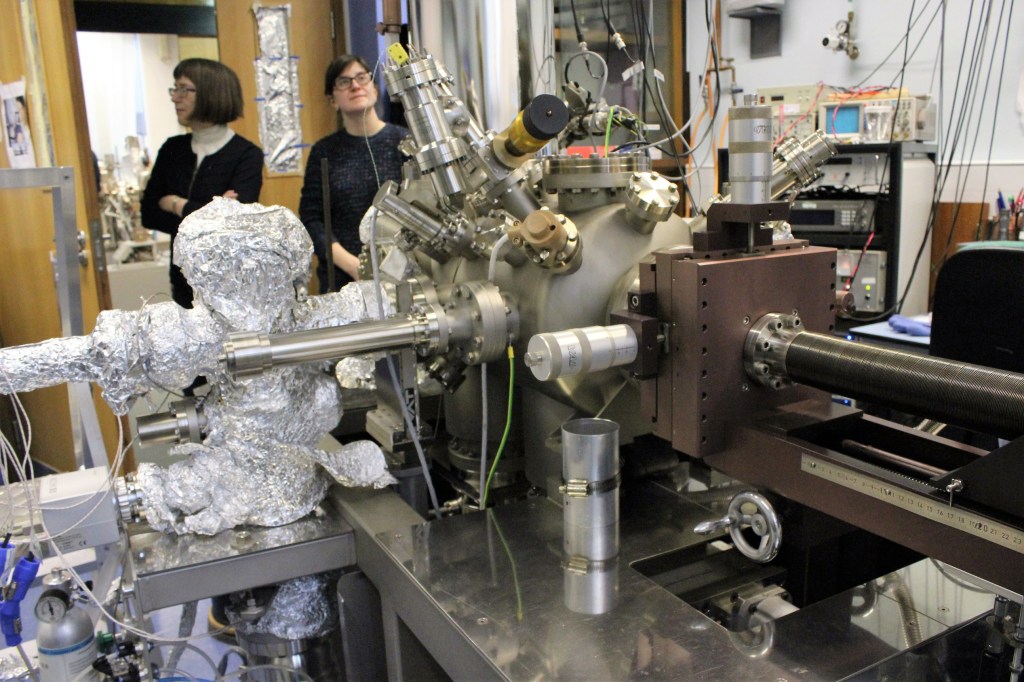
3D printing with atoms: Laboratory life
There is a long tradition of social scientists observing and analysing laboratory life. The most seminal book that has emerged from this tradition is probably Bruno Latour and Steve Woolgar’s 1979 Laboratory Life: The social construction of scientific facts (they changed the subtitle in 1986 to ‘the construction of scientific facts, as they became aware…
-
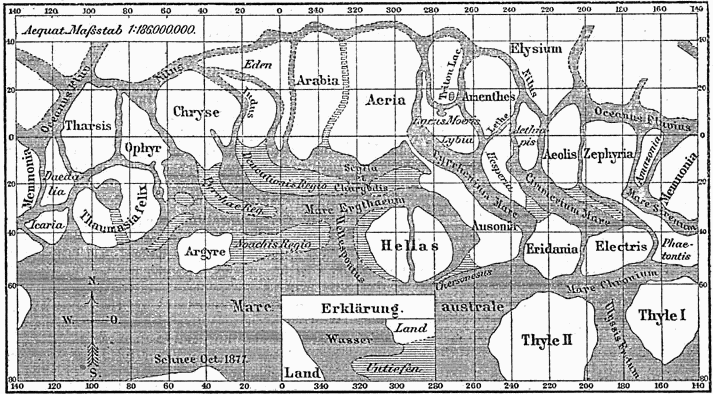
The mystery of the missing Martians
When the present is depressing and the future uncertain, it is sometimes nice to retreat to the past, especially to past futures. I recently tried to distract myself from the present by staring at Venus, Moon and Mars illuminating the evening sky. I then led my eyes wander around the internet and I inadvertently came…
-

Molecular machines
As the BBC reported today: “The 2016 Nobel Prize for Chemistry has been awarded for the development of the world’s smallest machines. Jean-Pierre Sauvage, Sir Fraser Stoddart and Bernard Feringa will share the 8m kronor (£727,000) prize for the design and synthesis of machines on a molecular scale. They were named at a press conference…
-

Camille Flammarion: Making science popular
Life on this planet is currently crazy, chaotic and confusing. In this context, I was thinking – wouldn’t it be nice to be able to poke one’s head out of the earthly firmament and look at the heavens beyond. This thought popped into my head because I had once seen an image depicting something like…
-

Ants and the art of science communication
Ants have been in the news this week. First there was Jim Al-Khalili’s interview with E. O. Wilson, a world authority on ants, for The Life Scientific. Then there was the announcement that scientists at the University of Cambridge (funded by the BBSRC) have discovered that ants use three types of hair to meticulously clean…
-

Images of the cell in art and science: An update
This is a Guest POST by Maura C. Flannery, Professor of Biology, St. John’s University, NY, reflecting on, what one may call ‘making cells public’ and the interactions between art and science in this process. The blog is related to an images and visualisation project funded by the European Science Foundation, rather than to the…
 Making Science Public