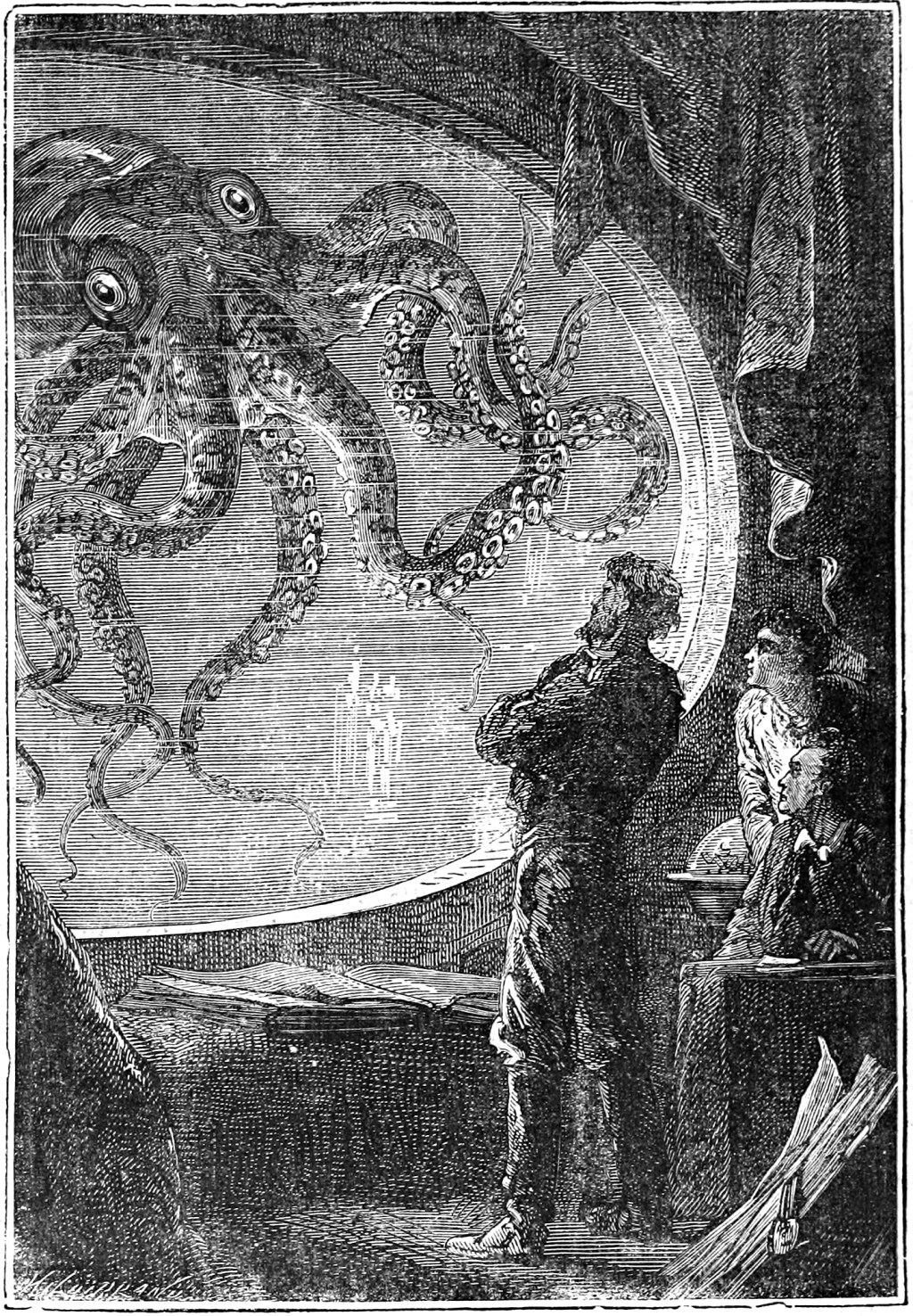
During unsettling times such as these, I tend to escape into the distant literary and scientific worlds of the 19th century, into what one might call, using a verse by the poet Alfred, Lord Tennyson “the fairy-tales of science”.
A new book by Richard Holmes has just come out that allows me to do just that – and it’s about Tennyson. Many of my past readings about Victorian science have, unbeknownst to me, revolved around Tennyson. In this post I’ll spin outwards from Tennyson and explore some networks of influence that have always fascinated me.
Boundless Deep – a biography of young Tennyson
Richard Holmes’s new book The Boundless Deep: Young Tennyson, Science and the Crisis of Belief is the biography of a poet I have never really engaged with, I have to confess. So, two years ago, when strolling about the magnificent ante-room of Trinity College Chapel, Cambridge, with its gleaming white marble statues of former alumni, I took photos of the statues of William Whewell, Isaac Newton and Francis Bacon, but I have only a blurry one of Tennyson as part of an overall photo of the room…. (middle one on the right).
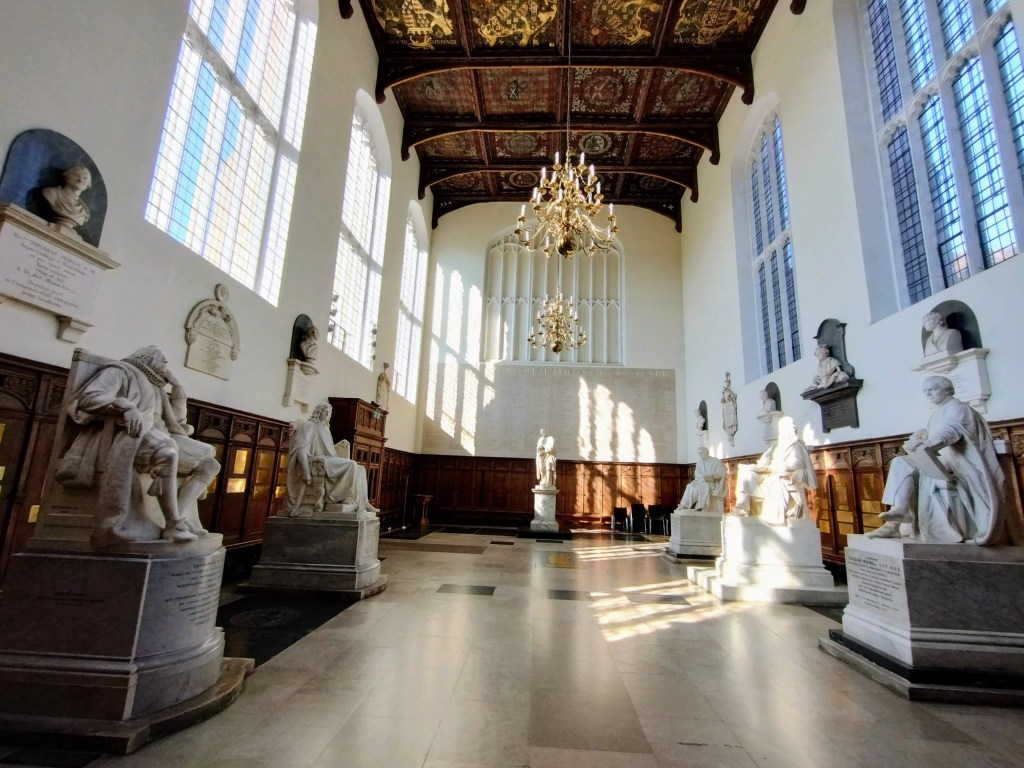
Holmes’s book gave me a much sharper view of the man, his work and all the Victorian scientists that I so love.
Unlike me, you all know that Alfred, Lord Tennyson (1809-1892) was a prominent English poet of the Victorian Age and Poet Laureate for 42 years. Holmes’s biography explores his early years from his birth to the 1850s, including his rather tumultuous family life, his heady student days at Trinity College, the death of a beloved friend, and after various meanderings, his marriage to an old family friend from Lincolnshire, Emily Sellwood. Unlike me, you also know some of his most famous poems, such as “The Lady of Shalott” (1833) and “The Charge of the Light Brigade” (1854). I’ll here focus on some of his poems that overlap with his deep interests in the sciences of his days, from geology to biology, from astronomy to chemistry, from physics to philosophy, from palaeontology to photography and more.
The Kraken, poem and metaphor
Holmes’s book starts (p. 19) with Tennyson’s poem “The Kraken” from 1830 which I had never read but which I instantly loved as it curls its tentacles through the realms of the deep sea, poetry, myth and science and, in a sense, becomes a metaphor for Tennyson’s life in this biography. It starts with these memorable lines (but read it in full, it’s quite short):
Below the thunders of the upper deep;
Far, far beneath in the abysmal sea,
His ancient, dreamless, uninvaded sleep
The Kraken sleepeth: faintest sunlights flee
In “The Kraken”, Tennyson begins to grapple with slowly emerging insights into geology through which Charles Lyell would disturb biblical chronology and the whole of Victorian science and society (Lyell’s Principles of Geology were published between 1830 and 1833). The Kraken woke… and an abyss opened beneath Victorian faith, while at the same time waking things that had slept undisturbed and forcing them into the light of science. Imbued by scientific imagery, “The Kraken” is, in a sense, a metaphor for Victorian science. But it is also a metaphor for Tennyson gradually emerging from the deep – a journey traced in this story of his early years.
This is a long book and many Victorian luminaries, scientists, poets, historians, philosophers, friends and lovers populate it. I can’t write about all of them. Instead, I’ll pick out four stories of remarkable people whose lives intersected both with Tennyson’s interests and my own, namely photography, astronomy, chemistry and, most importantly, but more surprisingly, philology.
Tennyson and Julia Margaret Cameron
You remember I mentioned Tennyson’s statue at Trinity College of which I didn’t take a good photo? There is a story to that. Tennyson was a student at Trinity form from early 1827 until early 1831. And that’s why his statue is there now. It was created in 1909 by Sir Hamo Thornycroft. As Richard Holmes points out (p. 1), the statue was based on photographs taken in the 1860s by the pioneering Victorian photographer Julia Margaret Cameron (1815–1879).
When I saw her name I thought, oh I have heard/written about her before, and lo and behold I had in my excursions into the adventures in photography by the astronomer Sir John Herschel. I greatly admired Cameron’s picture of Herschel, as it’s so fresh and natural – I just wish she had also taken one of his sister and collaborator Caroline Herschel. Cameron also took photos of the biologist Charles Darwin, who was born the same year as Tennyson and went to Christ’s College in Cambridge, the poets Robert Browning and Henry Wadsworth Longfellow, the painter George Frederic Watts, the historian Thomas Carlyle and her niece Julia Jackson (mother of Virginia Woolf). She was said to capture ‘the inner light’ of the people she photographed, or, as Tennyson called them, her ‘victims’. Just click on the names above and you’ll see – I love the one of Julia Jackson.
Tennyson and Cameron became neighbours on the Isle of Wight in the 1860s. She began dabbling in photography as a hobby but “swiftly mastered the latest techniques, especially methods of studio lighting and ‘artistic’ filtering, and the chemical development of high-quality black and white paper prints” (Holmes, p. 338). Tennyson was rather reluctant to pose for her and “it was not until May 1863, that Cameron finally fixed Tennyson’s enduring image as the iconic Victorian poet of his generation, unmissable in his wild black beard, caught in profile and clutching a book”. Tennyson “named this particular portrait, with a gleam of ill-disguised pleasure ‘The Dirty Monk’.” From then on, he was “doomed to look ancient, patriarchal and prophetic.” (p. 339)
Cameron collected many of her portraits of Tennyson in a special album which she presented to Sir John Herschel of whom she also took the most endearingly dishevelled photograph in 1867.
In the 1830s, when still developing his skills as a poet and learning a lot about science, Tennyson had read William Whewell’s (that is, his tutor’s) 1834 review of one of the earliest histories of science for scholarly and popular consumption, namely John Herschel’s 1830 On the Study of Natural Philosophy (Holmes, p. 65), which Whewell, reviewed alongside Mary Somerville’s On the Connexion of the Physical Sciences. In that famous review Whewell coined the word ‘scientist’, having been asked by the poet Samuel Taylor Coleridge to find a better word for “natural philosopher” or “man of science.” Who was Mary Somerville and how is she linked to Tennyson?
Tennyson and Mary Somerville
As Holmes points out (p. 155), Mary Somerville (1780-1872) had studied mathematics and astronomy in Edinburgh and she “came to London where her exceptional gifts became known among a small circle surrounding the Royal Society. In 1830, at the invitation of the Society for the Diffusion of Useful Knowledge, Somerville translated Laplace’s highly technical Mécanique Céleste.” That was when Tennyson was still at Trinity College and when the Mechanism of the Heavens became a textbook.
In 1838 Tennyson was given her follow-up work from 1834 On the Connexion of the Physical Sciences as a Christmas present (in the form of the 1837 edition), “possibly a gift from Emily Sellwood” his future wife. “What particularly struck him […] was the authority and simplicity of Somerville’s scientific explanation”, especially in the field of acoustics or ‘undulatory motions’, waves and sound, phenomena that he also evoked in his poems. Vibrations, voice and echoes are explored “In the Valley of Cauteretz” and later three kinds of wave motion – light, water, sound – in the “The Princess” (p. 156). “The Princess” also contains echoes of Laplace’s nebular hypothesis when he writes (p. 235)…
‘There sinks the nebulous star we call the Sun,
If that hypothesis of theirs be sound’
Just as “The Palace of Art” contained “glowing cosmological images” (p. 81) inspired by John Herschel.
Regions of lucid matter taking forms,
Brushes of fire, hazy gleams,
Clusters and beds of worlds, and bee-like swarms
Of suns, and starry streams.
Tennyson and Jane Marcet
Now we come back to something I mentioned at the start of this post, namely that Tennyson had written a poem containing the phrase “the fairy-tales of science”. The poem was “Locksley Hall”, written in 1835 but not published until 1845. In this poem “the narrator muses about his youth nourished by ‘the fairy-tales of science’”.
In Tennyson’s days, early science education was often in the form of imaginary conversations between two students of science and Jane Marcet‘s (1769-1858) extremely influential Conversations on Chemistry (1805) and Conversations in Natural Philosophy (1819) were the epitome of this genre (Holmes, p. 19) and Tennyson could find them at his library at home in Somersby.
Interestingly, these conversations between “two precocious girls” were also quite “flirtatious” and Tennyson “remembered his early troubled seductive introduction to science for years after” (p. 19). While Marcet’s dialogues intrigued Tennyson in terms of science and girls, the topic of science and women also came to preoccupy him in a more serious way.
As a young man, Tennyson was surrounded, not only by books written by women, but by real-life knowledgeable women, including for example Ada Lovelace as well as his sisters. He once even dreamed of a “Women’s University” (Holmes, p. 157)…. In the end such dreams became part of his poem “The Princess”. “The earliest manuscript draft … was simply entitled ‘The new University’” (p. 158). (See chapter 15 for a discussion of the whole poem)
Marcet’s conversations inspired not only Tennyson, but also Michael Faraday and Charles Lyell whose work would, in turn, have a “huge impact on Tennyson” (p. 21). Faraday became “the finest chemist of Tennyson’s generation” and “always recalled that it was reading Jane Marcet’s Conversations books in 1810 […], that first led him to attend Humphrey Davy’s chemistry lectures, and thence to his own triumphant career as director of the Royal Institution”. “Similarly the young Scottish law student Charles Lyell had encountered Marcet’s work […] and had first wanted to call his Principles of Geology Conversations in Geology (see Holmes, p. 20).
I wondered whether Tennyson ever attended lectures at the Royal Institution – Holmes doesn’t say. But it seems that in 1878 Tennyson heard a part of his own poem, “Maud”, delivered by his friend the physicist John Tyndall, recorded, and played back by an early phonograph!
So far I have explored some rather extended networks spun around Tennyson covering photography, astronomy and chemistry with a focus on Cameron, Somerville and Marcet, with Cameron revolutionising photography and Somerville and Marcet science communication. What about philology you might wonder. How does that fit in?
Tennyson and Richard Chenevix Trench
Amongst all the people that appear in this splendid book and that inspired associations and memories, I also stumbled upon an old and almost forgotten friend (who was an acquaintance of Tennyson’s at Trinity College), namely Richard Chenevix Trench (1807–1886) (Holmes, p. 60). He ultimately became Archbishop of Dublin. But for me he was the ‘words’ guy when I was writing the history of 19th-century semantics.
In the 1850s, that is, in the middle of all this literary and scientific effervescence around Tennyson captured in Holmes’s book, Trench wrote books about words, etymologies, synonyms, how words change their meanings; and like everybody else, it seems, he also wrote poems that had affinities with Tennyson’s.
In his widely read book On the Study of Words, Trench pointed out that in words, even taken singly, “there are boundless stores of moral and historic truth, and no less of passion and imagination laid up” (1851 edition, p. 13). He also stressed, echoing many German philosophers of language of the time, that language is “a collection of faded metaphors” (1877 edition, p. 70). Hear, hear!!
However, Trench regarded language as a divine gift. He therefore argued against ideas of transformation/evolution in biology and those that held ‘uniformitarian’ ideas about language change based on Lyell’s geological principle that natural processes shaping the Earth today, such as erosion, sedimentation, and volcanic activity, have operated consistently throughout geological time. Lyell himself suggested that languages change through gradual, incremental modifications, such as shifts in vocabulary and pronunciation. And, of course, this all foreshadows Darwin’s evolution by natural selection.
This type of uniformitarianism became part and parcel of theories of language change and a cornerstone of modern linguistics. Tennyson, by contrast, experienced uniformitarianism more as existential dread and explored its consequences, especially the topics of evolution and extinction, for himself and others in many of his poems. In his poem “In Memoriam” (1850), he wrote:
There rolls the deep where grew the tree.
O earth, what changes hast thou seen!
There where the long street roars, hath been
The silence of the central sea. (Canto 123) (see Holmes, p. 262)
A decade before the publication of Darwin’s On the Origin of Species (1859), he spoke of “Nature, red in tooth and claw”…. (Canto 56 – see Holmes, p. 208).
Conclusion
I started this post with some lines from “The Kraken”, a poem that explores something ancient, sleeping, hidden in deep time, that will only surface once at the end of everything. The “In Memoriam” lines, by contrast, are about standing on the surface and looking down into that same deep time, feeling the ground dissolve beneath you. In one poem the creature is looking up from below, in the other the poet is looking down from above, both confronting the same abyss.
Holmes’s biography of the early Tennyson mirrors the arc of “The Kraken”, at least in part. The poem begins in stillness and sleep, moves through slow biological time (the sponges of millennial growth, the polypi, the seaworms) and ends in a single violent surfacing and death. Holmes’s biography traces a long slow development, a turbulent emergence into public life, marked by a confrontation between faith, geology and biology, but doesn’t conclude in Tennyson’s death. Instead, it ends with his emergence into a more settled life with his wife Emily and his family.
The biography charts Tennyson’s early years of joy and turmoil, chaos and creativity, between 1830 and 1850. Tennyson would live for another 42 years until 1892. I wonder if he ever came across Jules Verne and his fairy tales of science published between 1863 and 1905, in which he explored the bottomless depth of sea, including a Kraken, the remotest regions of our planet, the inner layers of its geology, the skies above us and the moon circling around us.
Both Tennyson and Verne addressed the rapid changes in science, technology and exploration that marked the 19th century and created new genres of literature. We need more Tennysons and Vernes today to grapple with the rapid changes in science and society that we are witnessing and that are unsettling our lives on this planet. In the meantime, we can retreat for a bit into this engaging biography exploring Tennyson’s fascination with and dread of the ‘Boundless Deep’….
Title: Homage to The Kraken Wakes by John Wyndam (1953)
Image: Wikimedia Commons; Engraving of Ned Land, Professor Aronnax and Conseil (from left to right) viewing a giant squid from the lounge room of the Nautilus, from Twenty Thousand Leagues Under the Sea by Jules Verne. Illustration by Édouard Riou and Alphonse de Neuville, 1869.


 Making Science Public

Leave a reply to Robert Dingwall Cancel reply