On 4 August a wildfire started near where my twin sister lives in New Mexico. This was not unprecedented. Indeed I have written here on the blog about fires there in 2011 and in 2022. What was unprecedented was that I heard about it in the middle of seeing pictures of wildfires all over the globe from Canada to Croatia and beyond. The fire near my sister, the Frijoles fire, is still burning, despite amazing efforts by firefighters to contain it. Fortunately, containment is now finally starting to bite.
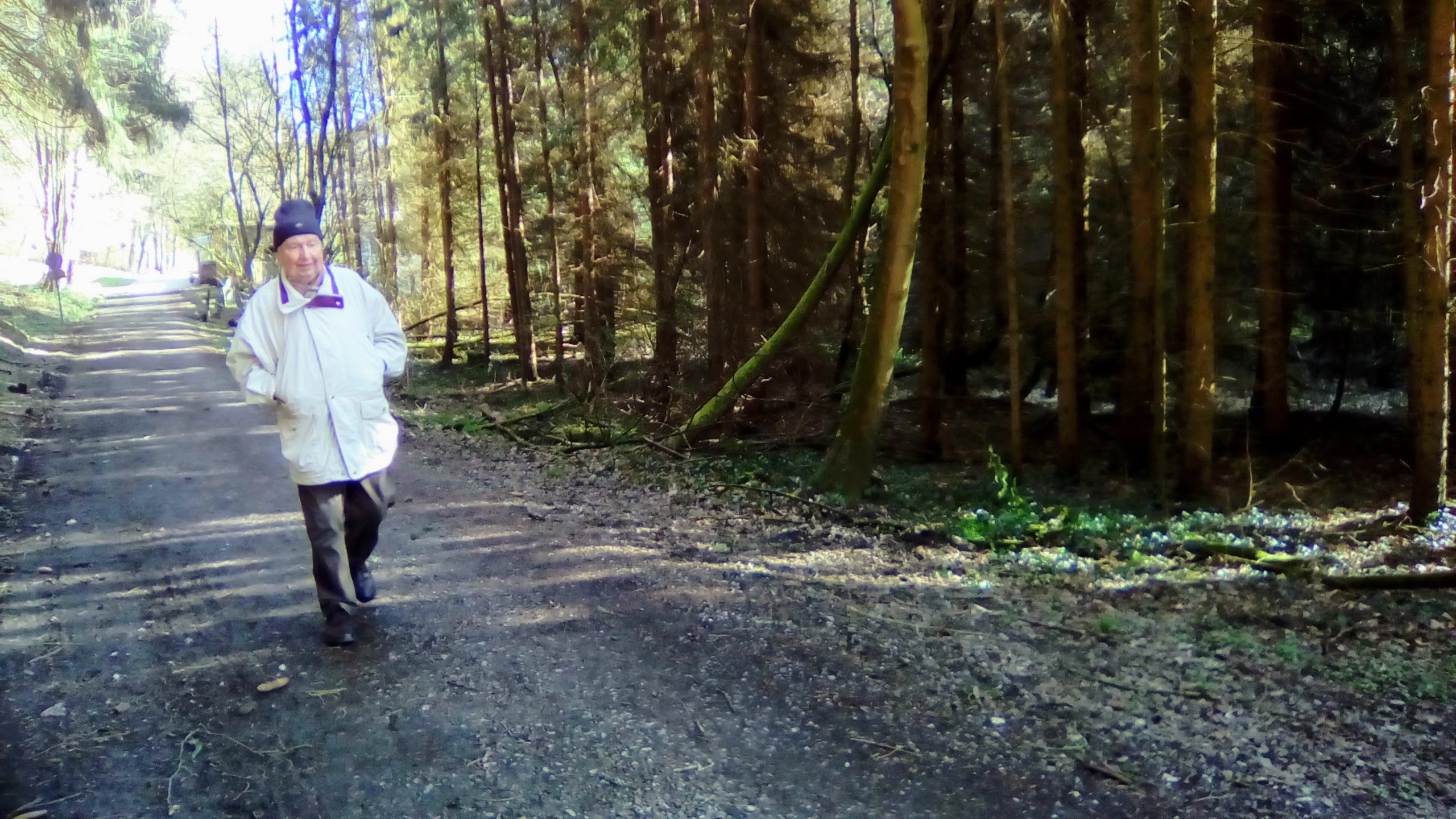
On 13 August a wildfire started near my old home village in Germany, near Stolberg. Remember Stolberg? I have written here about how it was affected by a devastating flood in 2021 and how my old father coped with that. He died some years later. He would have been devastated to see his beloved trees burn (see featured image). The wildfire destroyed large parts of the Hürtgenwald, which held special memories for him and us.
On 14 August millions of people in the UK were sent a wildfire emergency phone alert warning against ‘any activity that could start a fire’. This was an unexpected use of the national alert system which hadn’t been used for years. It came after wildfires broke out all over the UK during a spring and summer of heatwaves and droughts and destroyed, and this was unprecedented, about 20 houses in Stourbridge and damaged many more.
I have written about bushfires in Australia, about eerie fires and smoke in Canada, about wildfires in California, even about the language of wildfires here in the UK in 2025 when they destroyed some homes in London. But this year, like the extreme weather floods in 2021 in Germany, extreme weather wildfires became personal for me on so many levels.
Making climate change personal: the Hürtgenwald
I have said repeatedly in my reporting on climate change and extreme weather events here on the blog and elsewhere in some academic articles that climate change is no longer a ‘distant problem’. It’s here; it’s now; it’s everywhere; it’s everyone.
The alarm that went off on 14 August brought this home to a lot of people, although I heard just now Paddy O’Connell asking in the introduction to Radio 4’s Broadcasting House (Sunday 16 August) whether this was the nanny state going too far….. I don’t think so. It’s the nanny state finally growing up and taking responsibility. I also woke up to the Observer front page on the kitchen table headlined “The Burning Issue”.
This burning issue turned personal when my sister, looking out over the Frijoles fire on 14 August, got an alert on her Stolberg Facebook page, which she still maintains since the 2021 floods. She read that there was a big fire in the Hürtgenwald or Hürtgen Forest. It’s not far away from our old home. We used to hang out there as kids. So what happened? And why is this forest so special?
The fire broke out on 13 August and has now burned 300 hectares. It has now been confirmed as the largest wildfire in North Rhine-Westphalia’s recorded history since record-keeping began in 1991. It has forced the evacuation of the village of Gey (over 2,000 people) in the scenic Eifel, and a second fire jumped the border into Belgium’s Hohes Venn or the High Fens the following day, sending smoke back over into Germany. The fire in the Hohes Venn extended to 3000 hectares.
As children we used to walk through the Hohes Venn, a famous marshland, quite regularly with our father and mother and our Belgian friends. I know it well. While the Hohes Venn is full of amazing golden broom flowers, purple moor grass and blooming heather, the Hürtgen forest is full of tall pine trees, but also abandoned bunkers and “Drachenzähne” or ‘dragon’s teeth’ – pyramid-shaped tank traps.
My father used to tell us about the battle that went on in this forest at the end of the second World War and we often went for walks there and even played amongst the dragon’s teeth with our friends. So what was the battle?
The battle for the Hürtgen Forest was fought from September to December 1944, for 88 days. It was the longest single battle ever fought on German soil, and the second-longest in US Army history. It is remembered as one of the worst-managed, most costly, most pointless battles of the whole war: dense forest neutralised American air and armour advantages, and artillery “tree bursts” (shells exploding in the canopy, raining shrapnel down rather than out) made even a foxhole useless. By the battle’s later stages the German side was “hastily filled up with untrained boys and old men, often unfit for normal military service.” My father was not one of them as he was in a prisoner of war camp somewhere else – that was almost lucky.
This forest, that swallowed tens of thousands of young men 82 years ago, healed enough to become the place where my friends, my sister and I played, and is now, in our own lifetime, and watching both from the United States and from England, burning at a scale it has never burned before.
The fire also set off unexploded World War Two munitions still buried in the ground and explosions were heard overnight as the flames reached them. Over 2000 people fled the forest but nobody died this time.
The fire, like the fires here in the UK, worked as a ‘wake-up call’. And like the wildfires in North Wales, normally the wettest part of Britain, people in North-Rhein Westphalia saw the irony: “The fact that this is happening on such a large scale right now in the Eifel of all places, where we actually joke that it’s cold and wintery there for three-quarters of the year, is a double wake-up call and, in fact, very concerning”, said Alexander Held, a fire ecologist (translation my own).
Listen to the scientists! Listen to the trees!
Both German and English governments now must play catch up with other European governments in France and Spain, where ‘fire ecology’ has a much longer tradition. They could also learn a lot from states like New Mexico, for example, where wildfires are part of life and have become everybody’s, not just the government’s, responsibility. This involves more than not lighting barbecues or fireworks or flinging cigarettes out of the car. This involves thinking about the environment, about animals and people, including trees.
As one of the New Mexican elders said in 2022: “The sky is falling and the trees are crying”. Those amongst us who don’t want to listen to scientists, might want to listen to the trees… And instead of waging war on each other, we should remember those we lost in older wars and celebrate their lives by trying to save our trees, our plants, our animals and ourselves.
Image: My father and his trees in 2016
Leave a Reply