Category: Metaphors
-
From sloppers to slopocalypse: The lexical productivity of AI slop
At the end of last year, I wrote a blog post in which I dissected the word ‘enshittification’, a staple of AI slang. At the beginning of 2026, I want to do the same for enshittification’s conceptual friend ‘slop’, an indicator of what some call the slopification of AI. As the MIT Technology Review said…
-

Metaphorical genres in science communication: From gothic discovery to domestic intervention
I was idly scrolling Bluesky for some news that was not depressing when I chanced upon an article by Roger Highfield dealing with a recent advance in gene editing. It reminded me of two previous posts I had written, one back in 2016 on “Precision metaphors in a messy biological world” and another in which…
-

Making Science Public 2025: End-of-year round-up of blog posts
This year has been quite a year! First, I had to move the blog to a new independent home after the University of Nottingham shut down their blogging platform (I wrote two posts about this, one reflecting on the past and one on the future). Second, there was a lot to blog about, from wildfires…
-

From symbolist poets to science communication: Exploring an invisible thread in my academic life
Years and years ago, I had an Academia profile in which I mentioned that when I began studying French literature in the mid-1970s I fell in love with Baudelaire and Rimbaud. I no longer have access to Academia, but somebody must have seen that sentence and recently sent me an email asking how I got…
-
Metaphors for AI: Three blog posts and a summary
Over the last few weeks I have written a trilogy of blog posts about metaphors for AI, trying to survey emerging metaphors as well as those studying those metaphors, and calling for a metaphor observatory. Three posts is a lot to read. For those who want to have a quick overview, here is one. I…
-

Observing shifts in metaphors for AI: What changed and why it matters
In my previous two posts I have made the case for an AI metaphor observatory and surveyed the recent academic landscape of studies dealing with metaphors for AI in the sense of GenAI and LLMs. In this post, the third and last in my ‘trilogy’, I’ll attempt to review recent trends and shifts in metaphor…
-

Metaphors for AI: An overview of recent studies
In my previous post (part 1 of a trilogy) I called for an AI metaphor observatory to watch how people make sense (and sometimes nonsense) of generative artificial intelligence, or GenAI, through metaphors. I was pleased to see that many scholars are now collecting AI metaphors and studying them systematically and I provided a rough…
-
Making the case for an AI metaphor observatory
Between 2023 and 2025 I have written various posts on GenAI, Large Language Models and metaphors: one where I went out hunting for metaphors; one where I had a chat with ChatGTP about metaphors for itself, metaphors that turned out to be rather magical; one focusing on food or culinary metaphors for AI; some dealing…
-

Metonymy and me
Last week was metonymy week for me. In this post I’ll tell you three stories about metonymy, all related to a train ride to and from Oxford with my husband – a sort of anniversary trip, as we met there in 1985. Before I tell my stories, a quick reminder of how metonymy works in…
-
The dark genome: A gothic tale with a happy ending
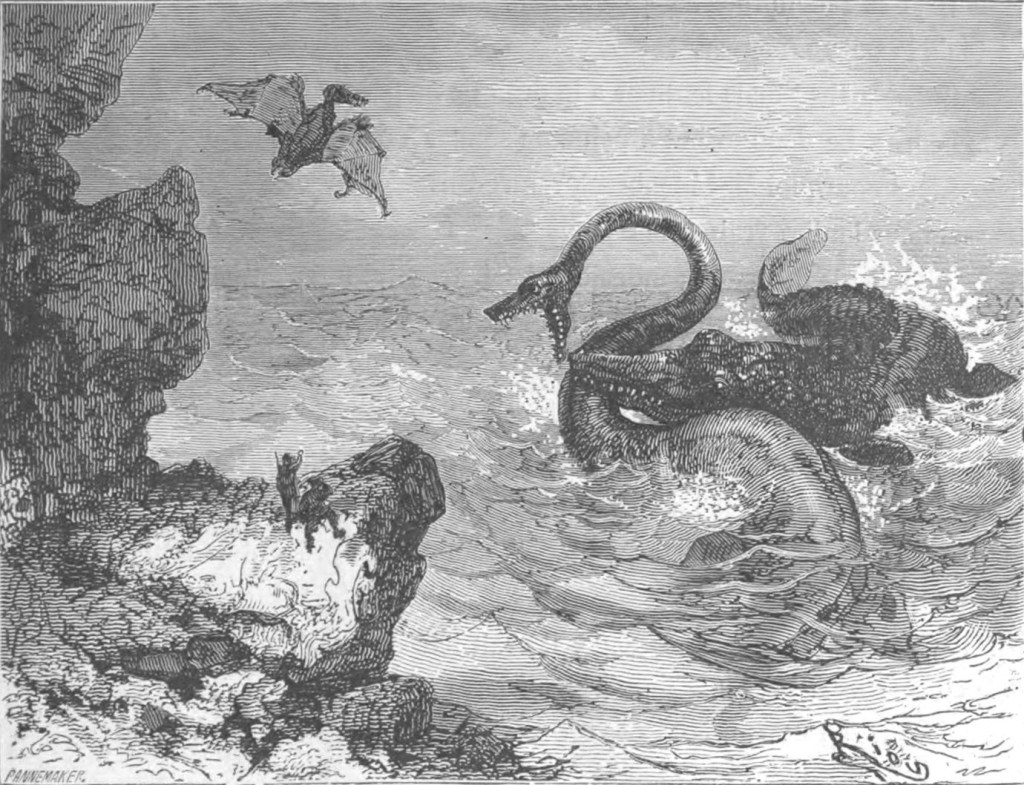
On 29 September Roger Highfield published an article for the Francis Crick Institute entitled “A message from the dark genome: The genetic ghosts that haunt and help us” (based on a chat with George Kassiotis and Samra Turajlic). This set my metaphor-whiskers twitching, as the article overflows with metaphors circling around the central one of…
 Making Science Public