Tag: technology
-

Stochastic flock: A new AI metaphor
Everyone who has anything to do with chatbots, generative AIs or LLMS knows about the ‘stochastic parrot’, a metaphor created by Emily Bender and colleagues in 2021. It sits on its perch and looks sternly at developers and users of these new computer technologies. At least everybody pretends to know it, because ordinary people don’t…
-

Polysemy, pragmatics and puppetry: What AI can learn from ethnomethodology
I recently wrote a blog post in which I summarised some research on the topic of multiple meanings and AI against the backdrop of an old paper of mine on ‘ambiguities we live by’, published in 2001 in the Journal of Pragmatics. Pragmatics is a branch of linguistics that studies how language is used in…
-

AI literacy and the case for polysemy awareness
I have recently written two posts on the issue of multiple meanings, polysemy and ambiguity, in AI discourse. When chatting with various people interested in AI metaphors, which has so far been my research focus, I realised that we all had neglected the topic of polysemy, or the multiple meanings that words have in a…
-
Polysemy, safety and epistemic risks in AI discourse
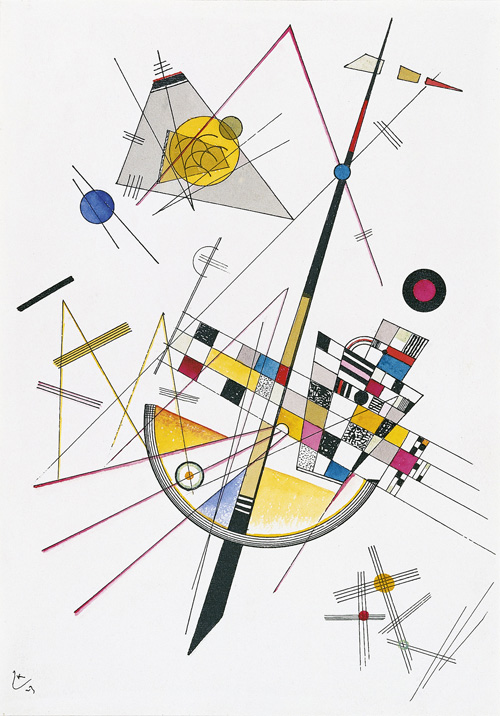
In last week’s post I traced some connections between an old paper on ambiguity and polysemy that a colleague and I published in 2001, when generative AI and LLMs were not yet on the horizon, and a 2026 paper linking ambiguity and polysemy to modern AI discourse to hype and manipulation, power and ethics. In…
-

Polysemy, power and ethics in AI discourse
I recently saw a paper by Travis LaCroix, Fintan Mallory and Sasha Luccioni entitled ‘Strategic polysemy in AI discourse: A philosophical analysis of language, hype, and power’ which immediately attracted my attention as I had worked on ambiguity and polysemy, in the distant past. I am now working on metaphors used in and for AI but I…
-

‘Habsburg AI’: Portrait of a metaphor and its family
A reader of my blog (yes, there is one!) recently asked me whether I had heard of “Habsburg AI”. To my shame I had not. So, I looked it up and what I found made me think, both about AI and about metaphors for AI. I have been blogging about metaphors for AI for a…
-
Is ‘cultural technology’ a metaphor for AI?
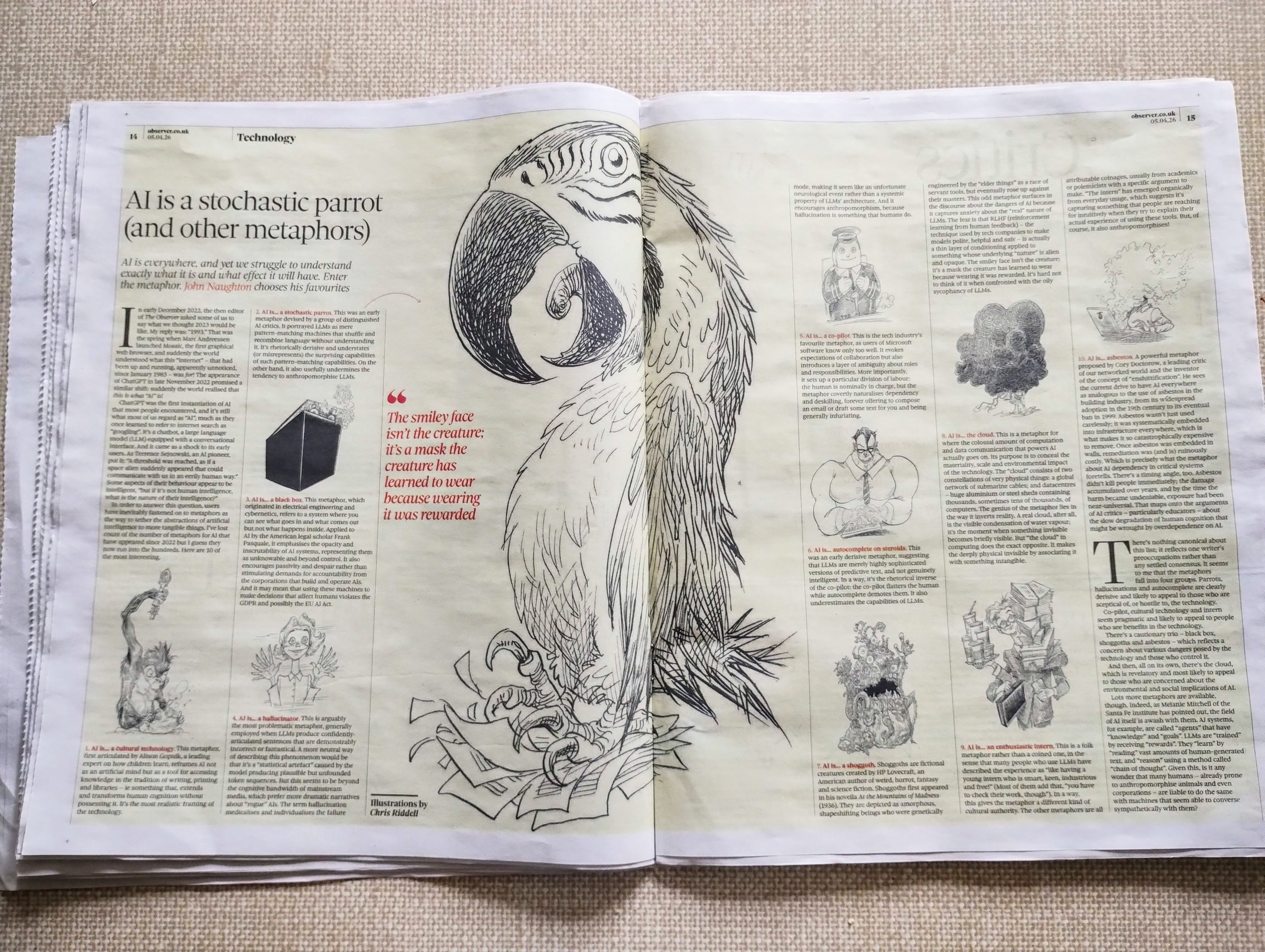
This morning, I opened Bluesky and saw a message from Matthew Cobb alerting me to an article in The Observer on “Ten metaphors for AI” by John Naughton. Metaphors for AI, c’est moi, I thought, and indeed in the online version there is a link to one of my posts. Wow. At the same time…
-

Vibe-coding spaghetti: Unpacking an AI metaphor for biology
I recently saw a post on Bluesky just saying “Coconuts”. Intriguing! Underneath was a screenshot of a tweet which was even more intriguing. The tweet said: “A techbro told me that biology is easy because DNA is just code, right? I told him that DNA is 4 billion year old, completely undocumented, vibe-coded spaghetti, built…
-

Moltbook: Snapshots of a metaphorical firework
(Now also available as podcast!!) In late January 2026, a social network appeared where only AIs could post and within days, the internet had responded with an explosion of parodies, panic, and metaphors that revealed as much about us as about the bots. In this post I have taken a few snapshots of this mimetic…
-
Metaphors for AI: Networks, holes and loops
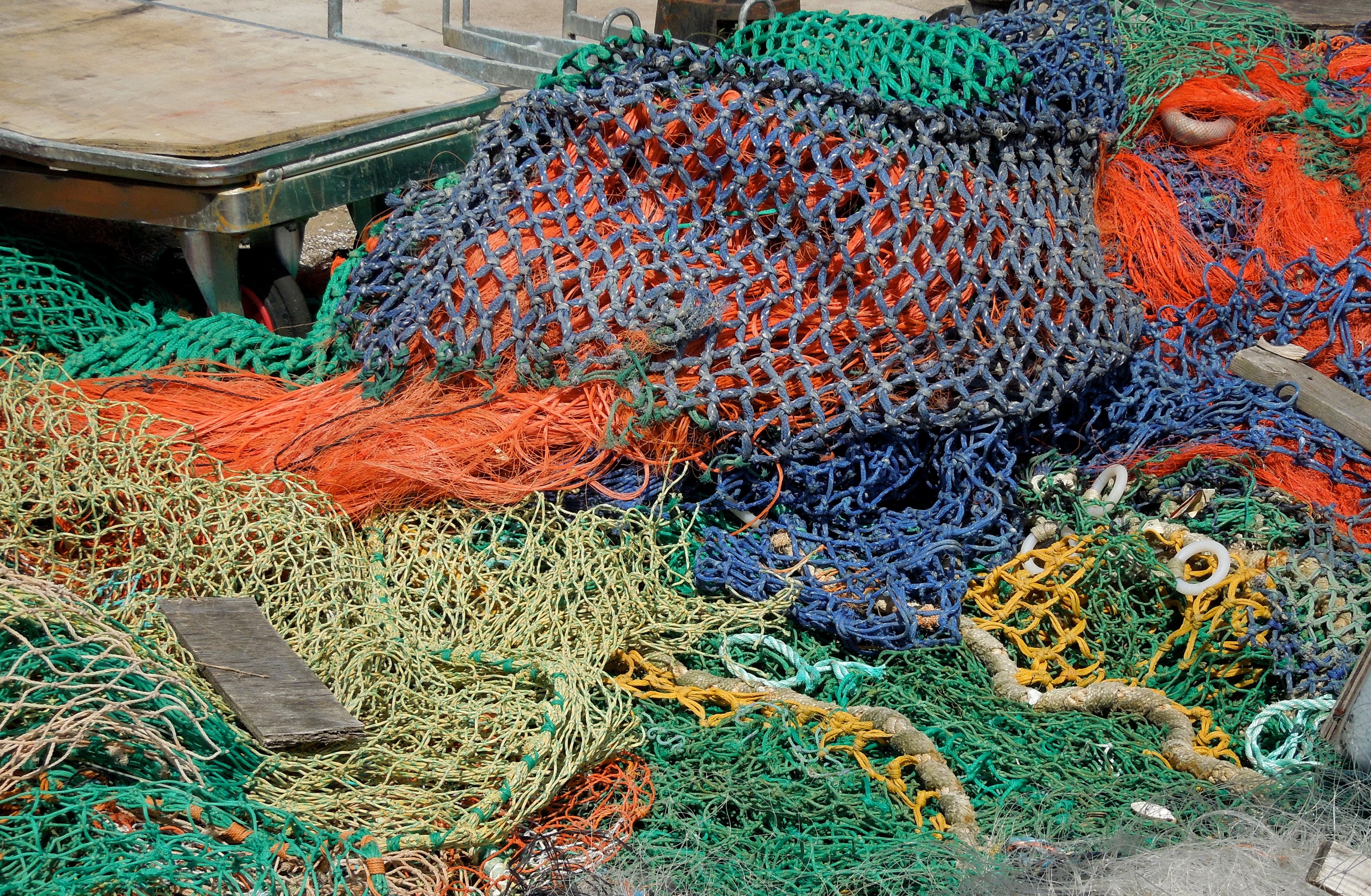
I have been observing metaphors for generative AI for some time. This does not mean that I understand what’s going on in AI, but they provide me with an illusion of knowledge. They throw a net or mesh of metaphors over the topic that provides something of an epistemological safety net. But sometimes that net…