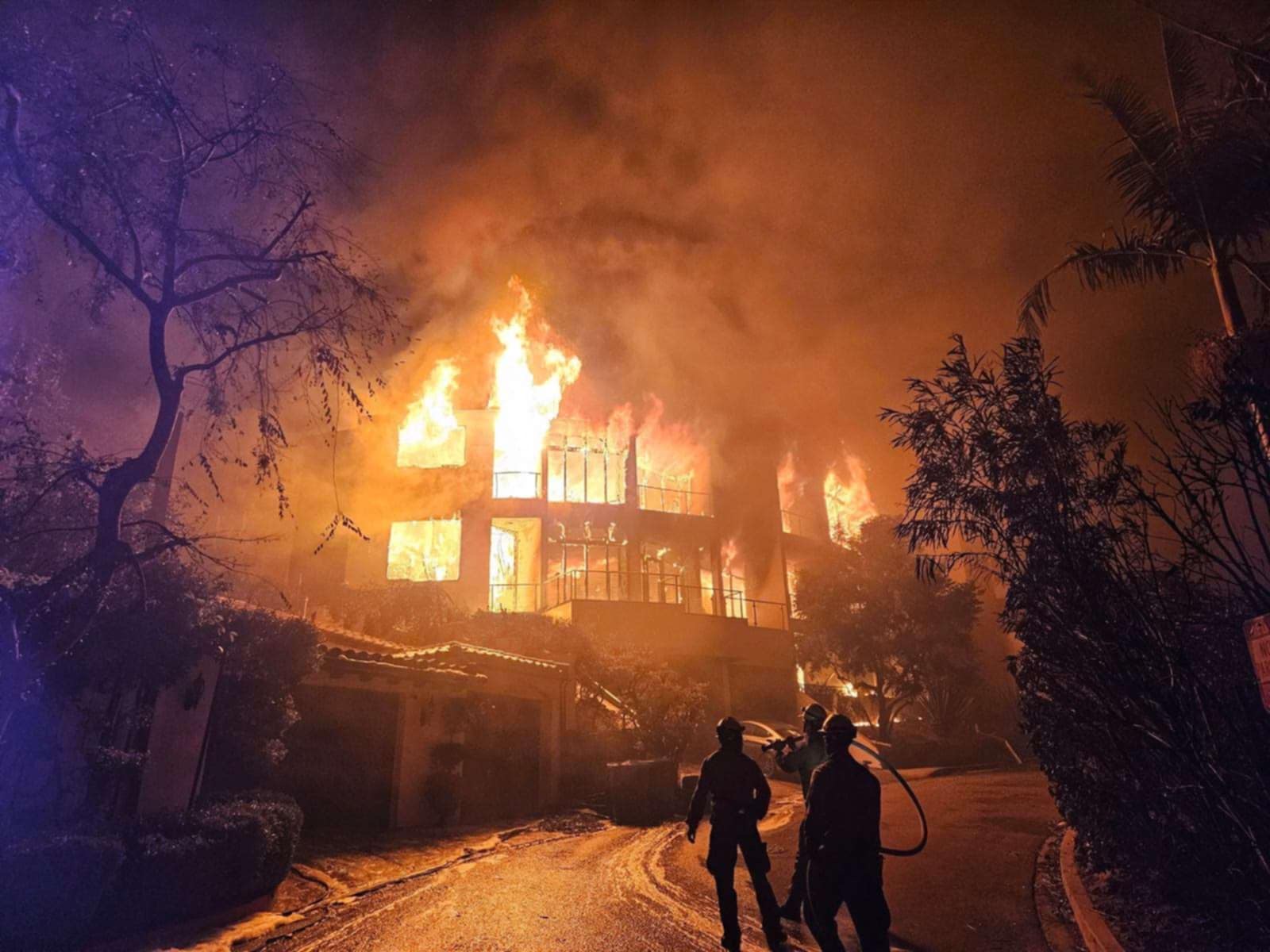
Rusi Jaspal and I recently published an article on the metaphorical framing of the January 2025 Southern California wildfires. Here is a short blog post about it to whet your appetite for the real thing which appeared online first in Metaphor and the Social World under the title “Fire, wind and lies: Mapping the metaphorical landscape of the January 2025 Southern California wildfires”.
•••
When the January 2025 wildfires tore through Southern California, destroying homes, killing at least 29 people, and wiping out over 18,000 structures, some owned by Hollywood celebrities, the language people used to describe them was as striking as the fires themselves. Reporters wrote of flames that “devoured”, “ravaged”, and “mowed down” entire communities. The wind “howled”, “screamed”, and was “unholy.” Embers fell like a “blizzard.”
This is not just colourful journalism. The metaphors we use to describe wildfires matter. They shape how we feel about them, how we fight them, and what policies we support.
The language of monster and war
To analyse how the fires were framed, we examined 135 articles published in the Los Angeles Times between 7 and 17 January 2025 – the initial phase of the disaster. What we found was a rich and shifting metaphorical landscape, falling into four broad types.
The most pervasive were conventional metaphors that cast fires and wind as agents – often monstrous or demonic ones. The fires “erupted”, “galloped”, and acted on “whims”. The Santa Ana winds were “devilish”, while the fires became a “gift to the fire gods”. These personifications made the disaster feel like something willed and malevolent, and it naturally gave rise to war framing: flames were “tamed”, fought with “aerial assaults”, and, memorably, defeated with super-scooper planes framed by stories of Superman, Tolkien, and the evacuation at Dunkirk.
These battle metaphors have real consequences. Research shows they can encourage evacuation, but they can also lead people to believe they can stay and fight, sometimes fatally so.
Something new: The airborne fire
The January fires were not typical wildfires. They burned at the wildland-urban interface, fanned by hurricane-force winds that turned embers into projectiles, flying miles ahead of any flame front and igniting homes from within. This produced genuinely novel metaphors.
Where older wildfire coverage spoke of a “tsunami” of flames advancing on a town, the 2025 fires demanded something different: embers as blizzards. Reporters and climate communicators wrote of “showers of burning embers”, a “cloud of embers” and “embers raining down” – fire turned into water. The embers themselves became agents in the shape of “fiery invaders of homes”, dropping “indiscriminately from the sky”.
This shift in metaphor reflects a shift in reality not only in the US but also in other parts of the world, like Australia for example. When fire spreads not only as a wall of flames but also as a storm of airborne sparks, traditional firefighting strategies and the metaphors that accompany them break down. Human agency feels deeply threatened. (But can also be enhanced through the right advice. I want to tell just one little personal anecdote which not part of the article. My sister lives in a wildfire prone region of the United States. I told her that I was writing this article and had read that one thing one can do in the ’embers as blizzard’ situation is to cover all vents on the roof through which the embers can gain entrance. So she has done that and is now a little bit better prepared for the next wildfire)
When fire became a metaphor for lies
Alongside the physical fires, a different kind of blaze was spreading in Southern California: misinformation. The LA Times reported that “conspiracies are spreading like flames” and described the paper itself as “fighting to throw cold water on misinformation as it flares up”. Political smoke billowed from Washington too, with one columnist writing of “billows of noxious smoke coming from Donald Trump and his GOP sycophants”.
Unlike coverage of the 2024 Valencia floods, where water metaphors were repurposed positively (“floods of volunteers,” “waves of solidarity”), the California wildfires generated fire metaphors that were almost entirely negative, mapping destruction and chaos onto social and political life. (See this blog post on reciprocal metaphorical mappings in crisis response)
New words for a new climate
Not all the metaphors were reactive. Climate scientist and extreme weather communicator Daniel Swain used the fires as an opportunity to introduce two carefully crafted explanatory metaphors that gained wide traction.
Hydroclimate ‘whiplash’ – the dramatic swings between extreme wet and dry conditions driven by climate change – explained why California’s wet winter had primed the landscape for catastrophic fire. The wet season grew masses of grass and brush; the dry season turned it to tinder.
The atmosphere as a ‘sponge’ captured how a warming world holds and releases more water, with the sponge growing “exponentially, like compound interest in a bank” with each fraction of a degree of warming.
These metaphors are not just descriptive; they are directly policy-relevant. Whiplash demands that water management plans account for both drought and flood. The sponge makes visceral the case for limiting emissions now.
Why it all matters
Metaphors of wildfires as monsters or enemies evoke fear and can spur action, but they can also induce feelings of helplessness when the enemy becomes impossible to fight by conventional means. Metaphors of embers as invaders similarly erode the sense that individuals or communities can protect themselves. All this can increase climate anxiety and anxiety about extreme weather events (my sister has packed her emergency bag…).
The misinformation metaphors complicated everything further, muddying the information environment precisely when clarity was most needed .
The January 2025 fires in Southern California show that, as extreme weather becomes more frequent and more strange, we will need new language to make sense of it. Climate-informed metaphors like whiplash and sponge offer a model: these metaphors are creative, accurate, emotionally resonant, and above all, useful. Getting the metaphors right is not just a matter of rhetoric. It is part of preparing communities and policymakers to survive what is coming.
***
Brigitte Nerlich is Emeritus Professor of Science, Language and Society at the University of Nottingham. Rusi Jaspal is Pro Vice-Chancellor (Research and Knowledge Exchange) and Professor of Psychology at the University of Brighton.
Image: 2025 Southern California fires and the United States Forest Service (USFS) – Taskforce 1600 at the Palisades Fire (Public domain)

Leave a Reply