At the beginning of the year, I was browsing my timeline on Bluesky* and came across sentences like this: “The absolute dumbest possible timeline. That’s what we live in.” “I know we all say ‘this is the stupidest timeline’ a lot but seriously this is the stupidest timeline”; “What a sh!tty-ass timeline to live in”; “what timeline are we in again????” “This is a disgusting timeline”; “Am closing replies to this one now, to calm down my timeline”; “THIS TIMELINE WAS NOT MEANT TO BE AN INSTRUCTION MANUAL, YOU ABSOLUTE BUFFOONS” and so on….
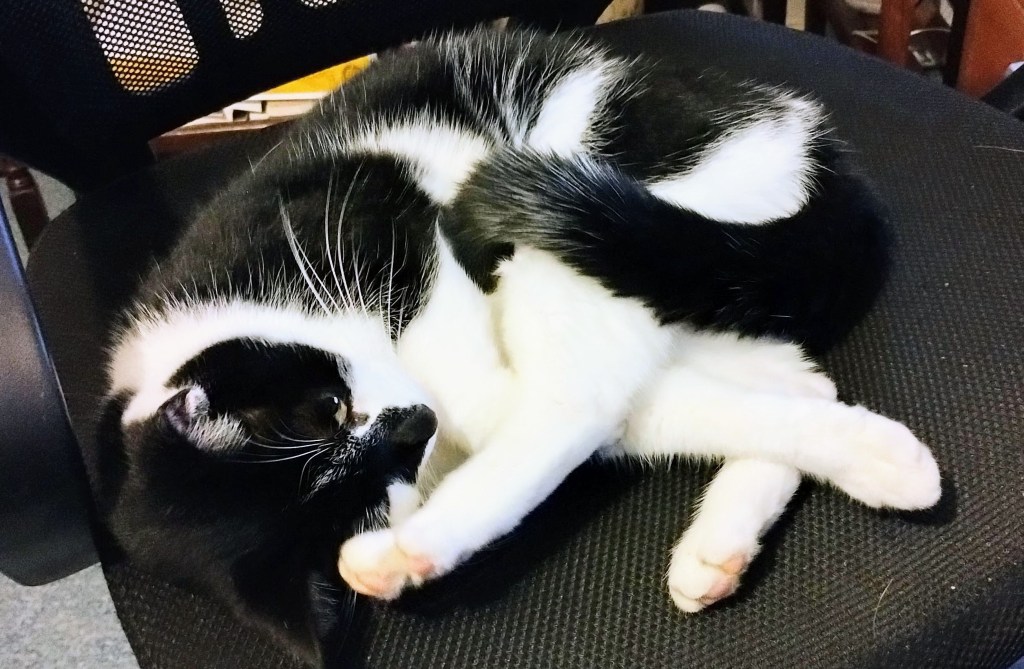
So, timelines are ‘lived in’; timelines are ‘stupid’, ‘dum’, ‘disgusting’; they need to be ‘calmed down’; the can even be mistaken for ‘instruction manuals’…. Interesting! With regards to calming down timelines, there seems to be one major remedy: cats as timeline ‘cleansers’ or ‘blessings’, but also piglets, dogs, birds, lambs and so on. Timeline cleansing is a big thing on social media.
Timelines through time
This made me think. On social media, the word ‘timeline’ has now developed a life of its own that is quite different compared to previous ‘timelines’. Let’s look at the previous lives of ‘timeline’.
As the Collins Dictionary points out, there are three main meanings of ‘timeline’ at present (and strangely the Oxford English Dictionary hasn’t cottoned on to the third one it seems but gives historical details for the first two – see also here and here):
1. A timeline is a representation of a sequence of events, especially historical events. Example: “A unique 13,000-word timeline runs through the full-colour volume, detailing events from the Earth’s creation to the present day.”
2. A timeline is the length of time that a project is expected to take. Example: “Use your deadlines to establish the timeline for your research plan.”
3. On a social media website, someone’s timeline is a list showing all their activity on that website, in the order in which it happened. Example: “Turn on the option to review posts you’re tagged in before they get added to your timeline.”
The first type of timeline or chronology charts patterns of sequences of events. It can be graphically represented and has been for a long time as explored in a book on Cartographies of Time. It is nowadays linked to data visualisation. There is also the sort of timeline that can be ‘reconstructed’ as when investigators try to find out how the fire spread in the Crans Montana bar fire for example – the timeline relating to the sequence of events. The second type of timeline is something everybody encounters in their jobs and family lives in terms of deadlines, schedules, timetables, and timeframes. And so we come to the third…
Timeline in our time
And then there is the social media timeline or feed which is digital and interactive. The Google AI overview helpfully described it as follows: “In social media, a timeline is the main, scrollable feed displaying posts, updates, photos, and activity from accounts you follow, organized chronologically or algorithmically to show recent content first, acting as a personal digital newspaper of shared experiences.”
The Merriam-Webster dictionary provides two nice examples for this modern use of the word ‘timeline’: “Algorithmic timelines quietly replaced chronological ones, until our social-media feeds no longer took direction from us, but rather directed us where they wanted us to go. —Yair Rosenberg” and: “And if there’s something funny … I make sure to Retweet so others can cleanse their timeline and enjoy. —Andy Richardson”
These examples and the ones I listed at the beginning of this post show that social media timelines are quite different to the timelines that preceded them. They are not just patterns we map or tools we use. Instead, they are spaces we inhabit or ‘live in’, environments that can be toxic or blessed, realities we relish or are trapped in.
Let’s look more closely at how a technical/bureaucratic term has become emotionally charged and almost personified in social media usage.
Personification, spatialisation and purification
In my rather cursory ‘research’ of my Bluesky timeline, I have noticed three metaphorical framings of ‘timelines’. More research is needed – especially based on corpus linguistics! Anyway, here we go:
Timelines as agents
Timelines have become entities with moods and moral qualities. Sometimes people treat timelines as if they had agency, similarly to how they treat chatbots. They are seen as agents that react in various ways to changes in, say, geopolitics, and users then react to them in terms of feelings of anger or joy. This also means that ‘timelines’ might need ‘calming down’ or ‘cheering up’ as in “Hope this cheers up your timeline”.
Alongside action and reaction there is also a need for control. As one commenter said: “People complaining about what they see on their timeline will continue to be funny to me. You can mute words and the timeline is curated by YOU”. Here agency is taken away from the timeline which becomes more of a piece of art.
Timeline as lived spaces
Looking at the examples we have seen so far, there also seems to be a shift from seeing timelines as representations or tools to conceptualising them as environments or habitats.
This environment is not only inhabited by ‘you’ but also, metonymically speaking, by other people that can enter and leave your space or be invited to enter or leave it, as in “Hoping we can all see you again sometime, you being a part of my timeline has been an exceedingly… just good”.
This space is also one for hospitality, reciprocity and mutual gift giving as when somebody posts: “A #taskmasteruk potato for your timeline” with a cross stich image of a potato…. And this brings me to my last observation about timelines ….
Timelines as spaces to be cleaned
Many of you who use timelines on social media will have noticed the phrase ‘timeline cleanse’ popping up in their timelines, normally accompanied by a picture of a cute animal. This happens in particular during times of personal or more general political stress, when timelines get, in a sense, dirty and polluted.
There is something almost like magical thinking about this ‘timeline cleansing’ – as if cute animals can purify a corrupted information stream. Timeline cleansers or detoxifiers seem to be folk remedies for information overload, algorithmic anxiety, the sense that social media feeds have been corrupted. Modernity meets folklore: if the timeline is polluted, we need purification rituals. There is an animistic quality to this language that needs further research.
I believe that this personification, spatialisation and purification of timelines is not just quirky language; it reflects how these feeds have become almost autonomous actors in our information ecology. As we have seen, people don’t just ‘view’ timelines on social media platforms; they live in them and with them as if they were alternative realities.
Timelines and (alternative) realities
Interestingly, there is also a meaning of timeline mentioned by Merriam-Webster which is distinct from the conventional and the social media use of ‘timeline’. This meaning is rooted in speculations about the multiverse and in science fiction and describes a distinct, parallel reality or alternative reality or universe where events unfold differently due. Merriam Webster gives the following example for this use of ‘timeline’: “… the notion that we’re surrounded by a multitude of parallel selves, one of which might be living in a better timeline than the one we’re stuck in.—S. I. Rosenbaum”….that rings bells!
This use of ‘timeline’ has also slipped into general conversation, it seems, and links back to the social media use of ‘timeline’.
The example given by Google is interesting though. It could also have appeared in my examples of ‘timeline’ uses I listed at the beginning of this post. This is the example provided: “After the 2016 election, many people online joked that they were living in the ‘darkest timeline’” – timelines seem to be circling back on themselves at this moment!
This multiverse metaphor of the ‘darkest timeline’ is intriguing, as it suggests that people are conceptualising their social media experience through science fiction frameworks. What is particularly poignant about this example is that people describe real political and social events as if they had slipped into an alternate reality. And this feeling comes through again in timeline talk ten years later too, at the beginning of 2026.
To make sense of political and social reality now and a decade ago, people borrow from science fiction and, in a way, conceptualise the time they live in as a timeline malfunction.
Conclusion
This little investigation of the various uses of ‘timeline’ over time and in our time has shown yet again how we use language in creative ways to navigate information, reality and political experience in the 2020s. This was a rather playful post* but it marks the tip of a serious iceberg, as information, reality and political experience become increasingly destabilised and surreal. In such a context… we need more cats in our timelines.
*I wrote this post before the events in Minneapolis.
Image: Picture of my part-time cat
 Making Science Public
Leave a comment