I have written a lot about the metaphors we use to talk about generative AI, but for some reason, one obvious and deep-rooted metaphor has flown under my radar: ‘copilot’ or ‘co-pilot’. It is so ubiquitous that it is easy to overlook.
In this post I want to rectify that situation and examine how the word has been used in AI discourse, together with a flock of other co-words using the co-prefix.
I looked the word up in the Merriam Webster dictionary, as the Oxford English Dictionary had not really caught up with the present day. Merriam Webster provides the following definition: “a qualified pilot who assists or relieves the pilot but is not in command”. Interestingly, the first three examples the dictionary provides for ‘copilot’ defined in this way (on 16 June 2026) were derived from AI discourse, showing how popular the AI use of that word has now become. One example was: “The four founded Cursor in 2022, initially focusing on building an AI copilot for the mechanical engineering industry.” (Bloomberg, Mercury News, 17 June 2026)
In the following, I’ll try to describe what one may call the semantic drift of that word in AI discourse from aircraft to AI, before looking at some of its lexical friends and trying to fathom the implications of their meaning and use. I’ll show how AI companies have quietly swapped ‘assistant’ for a family of co- words: co-pilot, co-worker, collaborator, now even ‘co-existence’. It sounds like humility. It isn’t quite.
Origins and evolution
To find out how copilot is used in AI discourse, I started to dig around using Wikipedia, Google and other sources, including Claude. From what I can make out, the first tech outfit to use the word in its modern sense was GitHub (a cloud-based platform and hosting service where developers store, share, and collaborate on software projects).
On 29 June 2021 GitHub Copilot was made available by GitHub and OpenAI for technical preview “as a code completion and programming AI-assistant” (Wikipedia). That was a year before the launch of OpenAI’s ChatGPT. The GitHub Copilot was, in a way, the metaphorical seed for all future uses of the phrase. The framing was built around the image of ‘pair programming’, with the AI as a second coder sitting beside you. The title of a GitHub website even said “Command your craft”. So, the aviation metaphor was baked in from the start: a copilot who assists but doesn’t take over the controls.
In 2023 things changed, as Microsoft branded a lot of its services as ‘copilot’, including Microsoft 365 Copilot, Copilot and Windows Copilot. It also rebranded Bing Chat as “Copilot”, with Microsoft explicitly framing this as bringing “the same familiarity” that the Copilot brand had achieved elsewhere across its products. Microsoft Copilot was no longer framed as an assistant, but as a ‘companion’.
Ars Technica noted that Microsoft now had roughly a dozen products sharing the name ‘copilot’, joking that Microsoft would soon need a “Branding Copilot” just to keep track of all its Copilots.
Copilot became, in a way, the umbrella metaphor for an entire company’s AI strategy at a time that OpenAI’s ChatGPT was taking off. In this context, AI observers and human computer interaction experts, such as Sellen and Horvitz, called “for designs for human-AI partnership that cede ultimate control and responsibility to the human user as pilot, with the AI co-pilot acting in a well-defined supporting role.” There was, as Sakar noted in 2024, an “aspiration that, like human copilots, AI copilots offer support, expertise, and backup, while the (human) pilot remains ultimately in control to make critical decisions”, a framing that soon began to unravel.
Around 2024 other co-prefixed words emerged, most noticeably perhaps co-intelligence, a term used as a book title by Ethan Mollick, an AI researcher and professor of management. In the book, he takes the metaphor out of the product branding and talks more generally about how we live with AI, as co-worker, co-teacher and coach. The word has escaped the branding and marketing vocabulary and become part of general AI discourse and critique.
As we have seen, a co-pilot was supposed to assist but not take control. In 2024 people noticed that this no longer holds. In a pre-print entitled “When copilot becomes autopilot” Sarkar argued that pace Sellen and Horvitz, humans are sliding towards ceding control to AI systems. Here the aviation term ‘autopilot’ is used to metaphorically critique the older aviation-derived metaphor of co-pilot.
In a 2026 overview of prominent metaphors for AI, the Guardian’s John Naughton pointed out that ‘co-pilot’ “is the tech industry’s favourite metaphor […]. It evokes expectations of collaboration but also introduces a layer of ambiguity about roles and responsibilities. More importantly, it sets up a particular division of labour: the human is nominally in charge, but the metaphor covertly naturalises dependency and deskilling, forever offering to compose an email or draft some text for you and being generally infuriating.”
Some of this had been discussed in a 2025 paper by Petersen and Almore entitled “Agentive linguistic framing affects responsibility assignments toward AIs and their creators“, focusing on the issue of responsibility. They noted how phrases like copilot that promise “to unlock productivity for everyone” use agentive grammar (what they call “grammatical metaphors”) that positions the AI as a causal subject. They show experimentally that this shifts how readers assign blame between the AI, the company, and the user when things go wrong.
They also link this to tendencies to anthropomorphise AIs – tendencies that are not the same across populations. They “show that linguistically framing AIs as agents influences lower experience people to anthropomorphize the AIs and influences all people to consider the companies which create them less responsible for their mistakes.” This means that people who have less experience with AIs tend to anthropomorphise them more easily.
A more recent article on metaphors and AI by Cheng et al from 2026 tracked how people describe AI over time and notes that the vocabulary of assistants, agents, copilots and companions has been used to market AI to the public, as we have seen. It also finds rising anthropomorphism in how ordinary people, especially women, older people and people of colour, talk about AI, confirming some of the Petersen and Almore findings. This seems to indicate that the framing of AIs through the little co-prefix, be it as copilots or co-workers seems to be working, at least amongst certain publics.
Another shift happened around 2025/2026 with the emergence and proliferation of AI agents that co-llaborate. We see a change from one-to-one copilots, mostly mutually dependent entities, to multi-agent, flock-like entities that co-produce outcomes increasingly independently from their initial creators (see my post on the ‘stochastic flock’). This marks a shift from assistants to agents, from subservience to dependency, and from mastery to autonomy.
So far, corporations that market agents haven’t really highlighted this shift and instead still use the co-prefix, as for example Google Deepmind’s 2026 ‘Co-Scientist’ framed as co-worker and ‘partner’. Here the co-prefix is extended into research/agentic territory and, despite the framing, applied to something closer to multi-agent systems. But things are changing, a change charted in a forthcoming book by Ethan Mollick entitled ‘co-existence’! In this new phase of AI “work is increasingly about assigning work to agents, rather than working together with chatbots”.
I have now surveyed the emergence and change of the co-pilot concept from its origins to the present day from ‘pair programming’ in GitHub times to independent coding by agents, and from asking whether and how to use AI to wondering how to live with and alongside it. But we haven’t looked at the proliferation of co-words along the way. While searching for developments of co-pilot, I collected a few instances of these other words and sorted them into some rough categories – more research and analysis needed.
Proliferation and taxonomy
In a similar way to AI ‘slop’, the little prefix ‘co-‘ has been rather prolific, only in the opposite direction. While the word slop and its friends and descendants are used by AI critics to highlight all that is bad about generative AI, the co-prefix, used mainly for marketing, tries to highlight everything that is good about generative AI. Let’s now look at my collection of co-words sorted by categories – which can overlap.
Brand terms and established terms
- GitHub Copilot
- Copilot (Microsoft’s flagship branding — Copilot for Word, Security Copilot, etc.)
- Co-Intelligence (Ethan Mollick’s book title)
- Co-Scientist (Google DeepMind’s research agent/s)
Companion and relational framing
- Co-worker, coworker – although also used for branding, as in Claude Coworker
- Co-host
- Co-mentor
- Co-counsellor, co-therapist, sometimes called a “clinical co-pilot”
Creative and collaborative framing
- Co-writer / co-author
- Co-creator
- Co-editor
- Co-designer
- Co-curator
- Co-strategist
- and, in robotics, Co-bot (nice portmanteau formation)
And there are probably many more including new terms for agentic framing, such as co-existence.
Ambiguity and ideology
The little co-prefix does a lot of work in AI discourse, both morphological and linguistic work and ideological work. It actually does more ideological work than alternative words, such as assistant or agent. Assistant entails a servant-subordinate framing. Agent implies autonomy and, increasingly, in 2026 marketing speak, near-independent action.
By contrast, the co-prefix encodes symmetry, that is to say, shared agency, joint ownership of the task, although this was somewhat hidden in the copilot metaphor. And while assistant and companion can be critiqued quite easily, the co-vocabulary adopted by the industry is more immune to attack, as it evokes togetherness and collaboration.
This brings us to ambiguity, a topic I broached in previous posts. In one of them I discussed a paper by LaCroix et al. on strategic ambiguity and ‘glosslighting’ in which the authors argue that in some AI discourse metaphorical or colloquial terms like ‘hallucination’, ‘chain-of-thought’, ‘introspection’, ‘alignment’, and ‘agent’ can be used strategically for deception, hype and the mobilisation of investment and institutional support. They demonstrate that such terms exhibit strategic ambiguity, which means they sustain multiple meanings or interpretations at once, combining narrow technical definitions with broader anthropomorphic or common-sense associations. This ambiguity can be exploited in various ways, for example to deflect ethical scrutiny.
The use of ‘co-pilot’ falls under this use of strategic ambiguity. The narrow technical meaning (‘assists but doesn’t command’) coexists with the broad anthropomorphic meaning (‘companion’, ‘partner’) and lets the industry have it both ways. This allows the shifting of blame and responsibility, as observed in the study of grammatical metaphors by Petersen and Almore. More importantly perhaps, it lets companies sell capability/autonomy upwards (to investors, to justify pricing, implying the AI is doing real cognitive work), while simultaneously selling subordination/safety downwards (to users and regulators, suggesting humans remain in control). This is the same ambiguity, monetised in two directions at once.
In this post I have focused on words like copilot and other co-words in AI discourse and what they mean in the context of human-AI interactions, but there are other words that also need scrutiny, not only assistant, companion and companion apps, partner, but also advisor, mentor, teacher, colleague, creative partner, thinking partner, desk mate, ZoomMate, interlocutor, sparring partner. And then there is ‘centaur’ and ‘reverse centaur’ which is another, although rather similar, story altogether.
PS. A shorter version is now available on The Conversation.
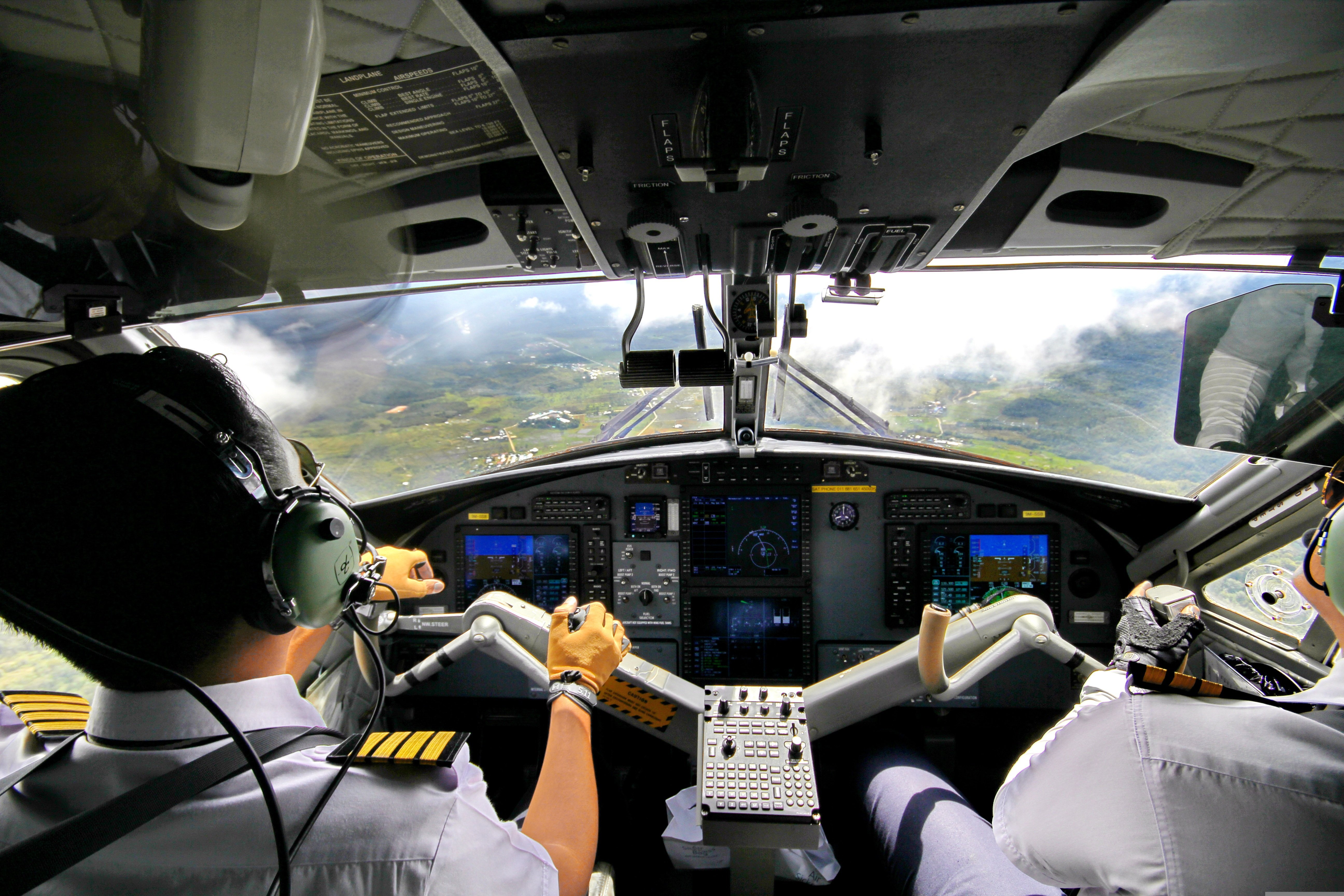
Image: Pixabay: Two pilots on a plane. Interestingly, when I began to search for an appropriate image of a ‘copilot’ on Google images I initially only found Microsoft copilot logos and similar. I had to add ‘plane’ as a search term to flush them out.
Leave a Reply