Between 2023 and 2025 I have written various posts on GenAI, Large Language Models and metaphors: one where I went out hunting for metaphors; one where I had a chat with ChatGTP about metaphors for itself, metaphors that turned out to be rather magical; one focusing on food or culinary metaphors for AI; some dealing with critical metaphors such as contamination, pollution and collapse or AI winter and AI bubble; and finally one reflecting on and categorising the flood of metaphors that was swamping me.
In that last post I ended up asking for an AI metaphor observatory. It’s time, I think, to ask for one again. Not only because the normalisation of LLM use doesn’t seem to have slowed down the deluge of metaphors, but also because there is now a whole academic industry studying AI metaphors that needs itself to be observed.
In this post, I provide a brief overview of what academics have been up to and pick out a few notable metaphors from that increasing body of work. I then highlight some possible trends in the ongoing proliferation of AI metaphors and AI metaphor research. I’ll end with another plea for a metaphor observatory.
This post will part of a trilogy. This post makes the case for an observatory by providing a brief survey of the landscape (‘the case’). The second post maps the terrain and explore emerging themes in the academic literature in more detail (‘the evidence’). The third post examines emerging changing trends in metaphor use and critique and compare a taxonomy I established in 2024 with what is going on now (‘the analysis’).
Mapping the academic landscape
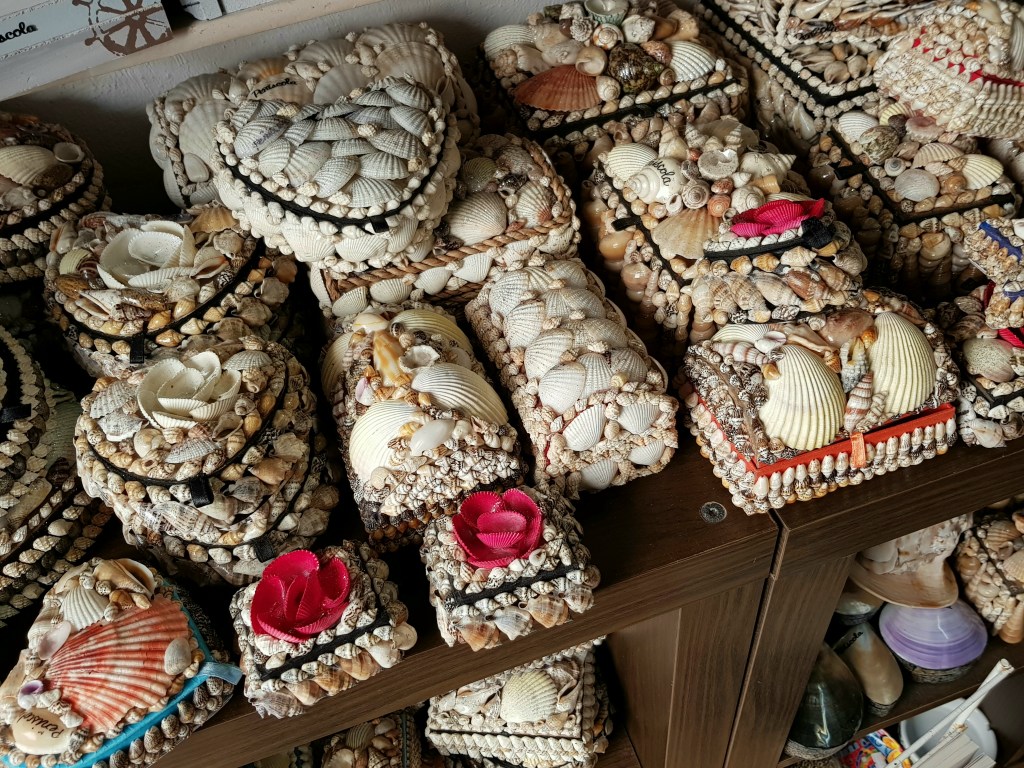
My own collection of metaphors for AI/LLMs has been rather haphazard. I picked them up like seashells washed up on the seashore, brought them home, looked at them, sorted them and thought about them. There are now scholars out there studying metaphors in AI more methodically and systematically.
So, on top of my continuing collection of seashells, I have now also started a collection of little treasure boxes made from seashells, if you like. Here is a quick overview of what is emerging (you can find references to the articles on which this categorisation is based at the end of this post and I return to them in a bit more detail in the next post):
- Analysis of metaphors for the AI by itself and for itself. In a way, this continues my own work, but in much more systematic way.*
- Collection and classification of emerging AI metaphors into clusters or taxonomies. For example, the cluster of culinary metaphors I studied is particularly rich because it is embodied; it is about consumption, nourishment, poison, satisfaction, artificiality; more visceral than ‘tool’ or ‘assistant’. There are many others out there now.
- Collection and analysis of crowd sourced metaphors as well as speculative metaphors.
- In-depth analysis of core core ore celebrity metaphors, such as the stochastic parrot, AI mirror, hallucination and so on.
- Conceptual metaphor analysis of emerging AI metaphors. This runs through a lot the academic work listed here.
- Conceptual metaphor analysis of bidirectional metaphors between humans and machines. We anthropomorphise AI while mechanising ourselves.
- Conceptual metaphor analysis of a media corpus (Guardian). I am surprised there is not more media analysis.
- Conceptual metaphor analysis of policy documents (EU AI act; UNESCO’s Guidance for Generative AI in Education and Research).
- Social representations analysis of AI, including salient metaphors.
- STS analysis of AI imaginaries.
- Studies of AI images and narratives and finding better images
- Contributions to critical AI literacy studies or CAIL (this includes conceptual/critical metaphors analysis).
- Studies of AI metaphors in education. Here we find multiple approaches and empirical research into what metaphors are used, how one can used metaphors who uses which ones, students or educators and so on (e.g. STEM students using support metaphors; humanities students using threat metaphors).
- Studies of metaphors for AI and machine learning in design with a focus on “metaphoring as a practice, within the design process“
- Use of metaphors to study public perceptions and attitudes to GenAI and LLMs or to teach Critical AI Literacy. Here one can observe a shift from looking at the functions of metaphors to metaphors functioning as research tools, even questioning the tools metaphor itself.
This emerging literature on metaphors for AI is grounded in older work in digital media studies, on digital metaphors, on metaphors for the internet, on older AI narratives, and so on, which I won’t review here (but for a good starting point see this article by Sally Wyatt and this book by Eric Chown and Fernando Nascimento, as well as this article published by the Royal Society relating to a larger project as well as this great European Parliamentary Research Service podcast)
In my next blog post, I’ll provide a more detailed overview of the themes emerging from the academic study of AI metaphors. In the following I’ll indicate some general trends I have observed myself in metaphor emergence and analysis.
Some trends in AI metaphor emergence and analysis
Looking at AI metaphor development over time, there is clearly a shift from early metaphors of wonder and magic (oracle, knowledge engine, crystal Ball), when people were trying to grasp what this new thing is, to the current phase of critical, specific, pedagogically-grounded metaphors when we are trying to understand what this thing does to us, our practices, our students and our knowledge systems, how we can teach and regulate it.
In terms of metaphors themselves, here are some major trends I have observed:
Metaphors are becoming more mature
The aura of wonder and magic that I had noted in the beginning is perhaps waning. Some core metaphors are embedding well in various contexts of analysis and critique such as the stochastic parrot (Bender and colleagues), the AI mirror (Vallor), the blurry JPG (Chiang), the lossy compression of the internet (Nalavade). They and other such metaphors serve as a focus for ongoing discussions of risks and benefits of AI. On the other hand, metaphorical framings of AI as assistants and co-pilots have become ubiquitous but their limitations are acknowledged.
Metaphors are becoming more diverse
Metaphors are becoming increasingly diverse and specialised relating to varied contexts and lived experiences. There are many striking metaphors out there, some collected in my previous blog posts, as well as newer ones that specially resonated with me.
The stiletto
One study used a survey of international postgraduate students to generate metaphors for generative AI (combined with other tasks). From this they derived a 4T Pyramid Model: Technical Support (representative metaphor: high-heeled shoes), Text Development (compass), Transformative Potential (Spider-Man), and Threat (drug). This sounds quite abstract but listen to this excerpt which brings the first metaphor to life: “For example, the participant who described GenAI as ‘a high-heeled shoe’ further explained: ‘because it makes my writing look noble and elegant, although I occasionally fall flat on my face in the academic world.’” I can really feel the pain!
Autotune for knowledge
In 2023 David Cormier mused about the dangers of autotuning knowledge in the age of AI and said: “In 1998, Cher’s ‘Believe’ hit it big as the first autotuned song to sell tons of, I guess, CDs. Autotuning takes the human voices and ‘removes the flaws’ that are there. […] Musical purists have been decrying the process since as they say that it removes the human part of the process from the music. It’s everywhere now. If you listen carefully to most popular songs you can hear the uniformity in the sound. That’s what’s going to happen to our daily knowledge use” – learning and education will be autotuned. In a 2025 article Jack Walton and Cormier used Donald Schön’s seminal concept of generative metaphor to fine tune these initial musings and to “generate a richer problematisation of issues posed by AI in education” – worth a read.
Eating plastic for your cognition
Of course, there are many more striking metaphors out there, which would all need to be explored further. For example, as early as 2023 I listened a podcast in which Jill Nephew, a former AI black box algorithm engineer with extensive experience in developing software architectures, talked about the risks associated with LLMs and claimed it was like eating plastic for your cognition – a visceral and alarming metaphor, also explored in a post on ‘digital plastic’ by Leon Furze. This metaphor is quoted now in academic articles on AI metaphors in education warning of the dangers of synthetic text and synthetic knowledge.
Metaphors are becoming increasingly critical
We have already seen that some of the diverse metaphors are more critical. This was also obvious in the culinary and pollution metaphors I collected in the. And there is much more!
To give only a few examples: Some people call LLMs ‘spicy autocomplete’, suggesting that large language models are merely highly sophisticated versions of predictive text or autocomplete, and not genuinely intelligent. Somebody compared an LLM to ‘a lawnmower of thought’ because it aggressively regresses to the mean. And, focusing on a different, but very important aspect of LLMs, some have created the metaphor a ‘colonising loudspeaker’ to highlight how the widespread adoption of LLMs, which are trained on data reflecting Western and colonial perspectives, can spread these viewpoints while silencing or marginalising other world languages and cultures.
And from early pollution metaphors we are now moving to more precise ‘asbestos‘ metaphors for example (see here and here and here for example). The ‘magical’ metaphors of the early years are gradually being replaced by more critical ones, such as the ouija board (thank you Olivia Guest for reminding me of these).
Metaphors are becoming more meta and more method
In education research in particular metaphors have now become research methodologies and metaphor analysis is used to study stakeholder perceptions of and attitudes to AI. Metaphors have become pedagogical tools used in teaching critical AI literacy through metaphor selection and analysis. They have become diagnostic instruments revealing blind spots, biases and power dynamics. There is clearly momentum in AI metaphor studies, especially in the context of education. This also means that there is a need to track and understand the emerging field of Critical AI Literacy or CAIL itself.
The case for an AI observatory
All this shows that an AI observatory, even a critical AI observatory, is important – we need to watch how people make sense (and nonsense) of AI in a changing world through metaphors. Metaphors are not just decorative flourishes; they are the cognitive lenses we use to think, talk and act. They are also tools of power. James Bono has put it nicely some decades ago: “The work of metaphor is not so much to represent features of the world, as to invite us to act upon the world as if it were configured in a specific way like that of some already known entity or process”. Metaphors are not just decorative flourishes, but tools of power.
As Margaret Mitchell noted in her 2024 article on metaphors in AI: the metaphors used to describe AI systems affect the way we interact with them, how much we trust them and also the different ways we regulate them. Others have pointed out that there is a pressing need to build “awareness of the frames that shape our understanding of AI systems, particularly large language models (LLMs) like ChatGPT” and to foster “meaningful dialogue about the implications of GenAI in education that moves past fear and awe”.
Metaphors make GenAI and LLMs “thinkable, debatable, and socially meaningful”, but we need to always ask who has the power in this meaning-making process and who has not.
PS Suhaib Aslam has published this wonderful website on which you can explore metaphors for AI in very creative ways – have a go!!!
Footnote
*Quick anecdote: I was just interacting with Claude on AI and metaphors when I sent a request by mistake. I got this reply: “Accidental sends happen to everyone – I certainly can’t judge, I’m just text in a box!”. I replied: “I’ll add that to my list of AI metaphors”. It replied: “That’s actually not bad as a self-description! Very literal but also kind of apt. Contained, bounded, flat… though it misses the interactivity aspect. Much better than ‘digital assistant’ or ‘knowledge engine’ anyway. More honest somehow.” We have come a long way since I first asked an LLM to tell me what metaphors it would use for itself – from hype to humility.
I know that some people are quite radically opposed to working with LLMs, but I have to admit that I found working with Claude quite helpful, especially when sorting things into categories and themes.
But you, humans!, please leave your own examples of metaphors in the comments ready for collection!
What metaphors are you using for AI? This observatory is a collective project – share your observations in the comments below or tag me on Bluesky using the hashtag: #AIMetaphorObservatory
Further reading
My own work on AI and metaphors. These posts contain lots of links to work produced on this topic before 2025, especially in other blog posts.
Nerlich, B. (2023). Artificial intelligence: Education and entertainment. Making Science Public Blog, 6 January, 2023 (early reflections on knowledge pollution and also some references to how ChatGPT dealt with metaphors)
Nerlich, B. (2023). ChatGPT and its magical metaphors. Making Science Public Blog, 27 October.
Nerlich, B. (2024). Hunting for AI metaphors. Making Science Public Blog, 12 April.
Nerlich, B. (2024). From contamination to collapse: On the trail of new AI metaphor. Making Science Public Blog, 19 April.
Nerlich, B. (2024). Talking with Claude about machine metaphors in biology. Making Science Public Blog, 12 July.
Nerlich, B. (2024). AI, LLMs and an explosion of metaphors. Making Science Public Blog, 30 August.
Nerlich, B. (2025). AI winter and AI bubble: Historical and metaphorical reflections. Making Science Public Blog, 29 August.
Nerlich, B. (2025). Food for thought: AI and culinary metaphors. Making Science Public Blog, 3 January.
Recent academic work on AI and metaphor (with a focus on mid 2024 to late 2025 but metaphor work on AI began already in 2023 and before!) (See also work by Sean Trott and Leon Furze)
Anderson, S. S. (2023). “Places to stand”: Multiple metaphors for framing ChatGPT’s corpus. Computers and Composition, 68, 102778.
Bender, E. M., Costello, E., Lee, K., Farrow, R., & Ferreira, G. (2025). Unsafe AI for Education: A conversation on stochastic parrots and other learning metaphors. Journal of Interactive Media in Education, 2025(1).
Blythe, M., Lindley, S., & Murray-Rust, D. (2025, July). Artificial Intelligence and other Speculative Metaphors. In Proceedings of the 2025 ACM Designing Interactive Systems Conference (pp. 347-356).
Cheng, M., Lee, A. Y., Rapuano, K., Niederhoffer, K., Liebscher, A., & Hancock, J. (2025). From tools to thieves: Measuring and understanding public perceptions of AI through crowdsourced metaphors. arXiv preprint arXiv:2501.18045.
Cheng, M., Lee, A. Y., Rapuano, K., Niederhoffer, K., Liebscher, A., & Hancock, J. (2026). Metaphors of AI indicate that people increasingly perceive AI as warm and human-like. Communications Psychology.
Conoscenti, M. (2025). Portrait of the AI as a Young Metaphorist. QUADERNI DEL CIRM, 6, 13-48.
Dihal, K., and Duarte, T. (2023). Better Images of AI: A Guide for Users and Creators. Cambridge and London: The Leverhulme Centre for the Future of Intelligence and We and AI.
Esbrí-Blasco, M. (2024). A cognitive semantic analysis of metaphors in the conceptualization of AI. repositori.uji.es
Esbrí-Blasco, M. (2024). Conceptualización metafórica de la IA en el discurso digital. Revista De Ciencias Sociales, 12(2), m241202a07.
Ferreira, G., Costello, E., Farrow, R., & Lee, K. (2025). Metaphors of AI in education: Discourses, histories and practices. Journal of Interactive Media in Education, 2025(1). (Big collection of articles)
Förster, S., & Skop, Y. (2025). Between fact and fairy: tracing the hallucination metaphor in AI discourse. AI & SOCIETY, 1-14.
Guest, O., Suarez, M., Müller, B., et al. (2025). Against the Uncritical Adoption of ‘AI’ Technologies in Academia. Zenodo.
Gupta, A., Atef, Y., Mills, A., & Bali, M. (2024). Assistant, parrot, or colonizing loudspeaker? ChatGPT metaphors for developing critical AI literacies. Open Praxis, 16(1), 37-53.
Guest, O., Resources on CAIL https://olivia.science/ai
Jin, F., Sun, L., Pan, Y., & Lin, C. H. (2025). High heels, compass, spider-man, or drug? Metaphor analysis of generative artificial intelligence in academic writing. Computers & Education, 228, 105248.
Konstantinidis, A. (2025). A Metaphor for Rethinking Artificial Intelligence in/and Education. Journal of Interactive Media in Education, 2025(1). [mirror metaphor]
Ljadov, Y., Paramonova, I., & Bauters, M. (2025, October). Metaphors as Cognitive Bridges: Matching User Expectations with AI Capabilities. In Proceedings of the 36th Annual Conference of the European Association of Cognitive Ergonomics (EACE) (pp. 1-8).
Lupetti, M. L., & Murray-Rust, D. (2024, May). (Un) making AI magic: A design taxonomy. In Proceedings of the 2024 CHI Conference on Human Factors in Computing Systems (pp. 1-21).
Lupton, D., & Bailey-Charteris, B. (2025). ‘You Can’t Put the Cat Back in the Bag Once It’s Out’: Public Understandings, Practices and Imaginaries Concerning Generative AI Among Australians. Practices and Imaginaries Concerning Generative AI Among Australians (September 18, 2025).
McKnight, L., & Shipp, C. (2024). “Just a tool”? Troubling language and power in generative AI writing. English Teaching: Practice & Critique, 23(1), 23-35.
Maas, M. M. (2023). AI is like… A literature review of AI metaphors and why they matter for policy. AI Foundations Report, 2.
Misha. P. (2025). The Mirror and the Machine: https://punyamishra.com/2025/03/13/the-mirror-and-the-machine-navigating-the-metaphors-of-gen-ai/
Mitchell, M. (2024). The metaphors of artificial intelligence. Science, 386(6723), eadt6140.
Mollema, W. J. T., & Wachter, T. (2025). ” i am a stochastic parrot, and so r u”: Is AI-based framing of human behaviour and cognition a conceptual metaphor or conceptual engineering?. arXiv preprint arXiv:2504.07756.
Murray-Rust, D., Nicenboim, I., & Lockton, D. (2022). Metaphors for designers working with AI. DRS2022: Bilbao.
Nguyen, T. M. (2024). Conceptual metaphors of artificial intelligence and AI development in the Guardian newspaper. VNU Journal of Foreign Studies, 40(4), 128-141.
Oster, N., McCaleb, L., & Mishra, P. (2025, March). Swiss Army Knives, Stochastic Parrots, Drunk Interns, and Overlords: Understanding AI Through Metaphors. In Society for Information Technology & Teacher Education International Conference (pp. 842-845). Association for the Advancement of Computing in Education (AACE).
Pusceddu, C. (2025). Review of “Exploring Metaphors of AI: Visualisations, Narratives and Perception” – A curated research session at the Hype Studies Conference, “(Don’t) Believe the Hype?!” 10-12 September 2025, Barcelona.
Roe, J., Furze, L., & Perkins, M. (2025). GenAI as digital plastic: Understanding synthetic media through critical AI literacy. arXiv preprint arXiv:2502.08249.
Roe, J., Perkins, M., & Furze, L. (2025). Reflecting Reality, Amplifying Bias? Using Metaphors to Teach Critical AI Literacy. Journal of Interactive Media in Education, 2025(1).
Ursin, F., Fürholzer, K., & Salloch, S. (2025). Metaphors in digital radiology: ethical implications for responsibility assignments of human-AI imaginaries. AI & SOCIETY, 40(7), 5139-5149.
Vallis, C., Wilson, S., & Casey, A. (2025). Fear and Awe: Making Sense of Generative AI through Metaphor. Journal of Interactive Media in Education, 2025(1).
Vo, L. H., & Huynh, N. T. (2025). Vietnamese EFL Teachers’ Perspectives on ChatGPT: A Conceptual Metaphor Analysis. SSRN.
Zirenko, M., Machura, I. A., Fabriz, S., Schulze-Vorberg, L., & Horz, H. (2025). AI and Learning with AI: University Students’ Metaphorical Conceptualizations. Journal of Interactive Media in Education, 2025(1).
Yan, Y., Sun, W., & Zhao, X. (2024, July). Metaphorical conceptualizations of generative artificial intelligence use by Chinese university EFL learners. In Frontiers in Education (Vol. 9, p. 1430494). Frontiers Media SA.
Image: Wikimedia Commons: Shell boxes, souvenirs from a shop in Peñíscola

 Making Science Public

Leave a comment