Making Science Public: A blog on science, language and culture
-

Invasion as a metaphor
On 31 of October Suella Braverman, Home Secretary of the United Kingdom, said, according to Hansard, the official report of all Parliamentary debates: “The British people deserve to know which party is serious about stopping the invasion on our southern coast, and which party is not.” ‘Invasion’ is generally defined as the “action of invading…
-

What’s in a name? On embryology, developmental biology and discipline naming
Last week Philip Ball asked an interesting question on Twitter which provoked a lot of responses and comments: “when did ‘embryology’ start to become ‘developmental biology’? I bet Philip will post an excellent answer to that question soon. I am not Philip and I am not a historian of biology; I am just a magpie.…
-
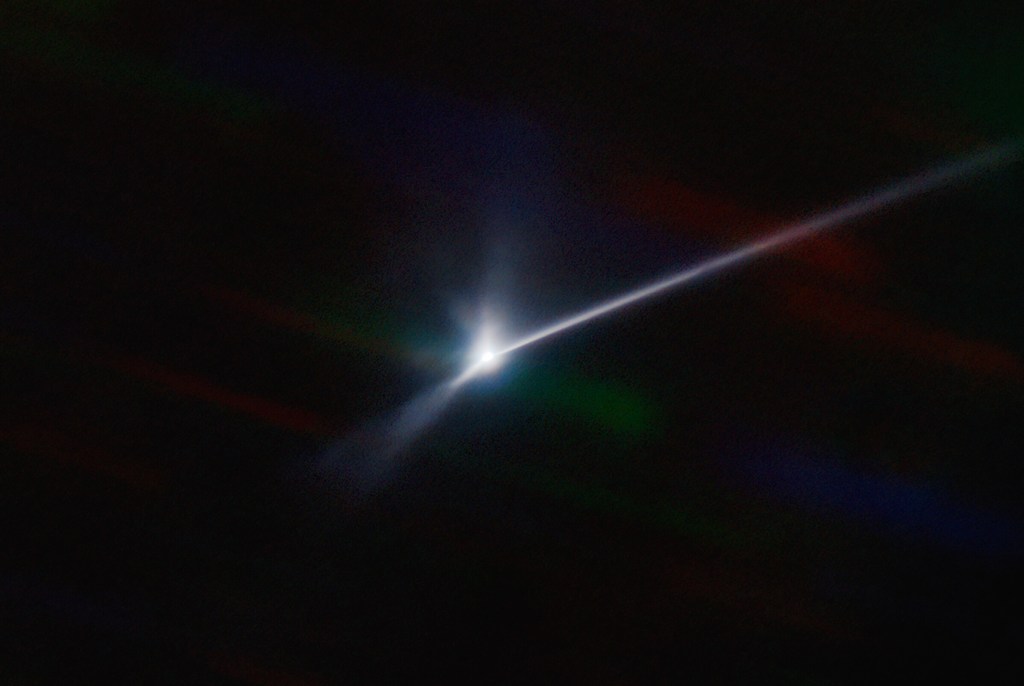
Asteroids: Angst, amazement and avarice
On planet earth it is extremely difficult to change people’s, especially politicians’, behaviour to avert, say, climate catastrophe. Not so in space. Here humans boldly achieve the unthinkable, namely changing the motion of something that’s going in a dangerous direction. What I am talking about is, of course, NASA’s “first-ever mission dedicated to investigating and…
-

Resisting metaphors: The case of trickle-down economics
I have recently been corresponding with Ahmed Abdel-Raheem, a metaphor researcher who is developing a theory of metaphor resistance. Ahmed is looking at how producers of metaphors deal with metaphor failure in various ways (denying it was a metaphor, reinterpreting it etc.) and how metaphor audiences or viewers can resist metaphors, be they verbal or…
-

Andrea Wulf’s ‘Magnificent Rebels’ (2022)
The situation in this country and around the world is quite depressing and I wondered what could cheer me up. Then I started to read Andrea Wulf’s Magnificent Rebels: The First Romantics and the Invention of the Self and that did the trick (I had previously read her biography of Alexander von Humboldt and enjoyed that too).…
-

Tipping point
Over the past 15 years or so, the use of the term ‘tipping point’ has exploded in the scientific literature. My current interest was sparked by a new paper on tipping points published in Science. The lead author is David Armstrong McKay, a University of Exeter Earth systems scientist, and the paper is an update…
-

Science, communication, politics and power
I haven’t written about science communication for a while. It’s a thorny subject. But a few days ago, Ken Rice posted some musings on science communication which made me think. He argues that when ‘we’ (I suppose he means individuals or nations or indeed policy makers) don’t “deal with various societal problems as well as…
-

Monkeypox and metaphors
Again and again, I have come across standard ways of metaphorically framing infectious diseases and their spread, be it foot and mouth disease, avian influenza, swine flu, SARS, Zika, Covid, and now monkeypox. War and invasion metaphors are used abundantly, but also fire, wave and flood metaphors, landscape metaphors like valleys and peaks and much…
-

Poxpics: The visual discourse of monkeypox
Last week I talked about the coronavirus as an invisible killer and discussed some shortcomings of that metaphor. However, despite the nefarious uses of that metaphor, we should not forget that the coronavirus IS indeed an invisible threat and can be an invisible killer; no way around it. It wafts through the air unseen and…
-

Invasion of the covid metaphor
This post is cross-posted from the i-human Covid-19 blog (University of Sheffield). It summarises a chapter I wrote for the book Being Human during Covid-19. I’d like to thank the editors of the book for both inviting me to write the chapter and giving me the opportunity to blog about it. *** As Milan Kundera said in…
 Making Science Public