Making Science Public: A blog on science, language and culture
-
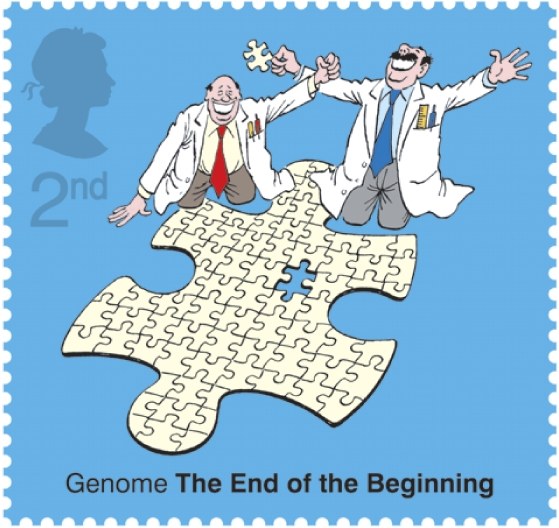
Maps, books and jigsaws: The human genome is back
I was recently messing about on the news database Nexis when I came across this pronouncement from 1982!! “Weissmann appealed directly to the delegates for an international basic-research fund to determine how genes function and their relationship to disease. With current technology, he declared, mapping the entire human genome would require some 50,000 man-years and…
-

From ‘deadly enemy’ to ‘covidiots’: Words matter when talking about COVID-19
This article, by Ruth Derksen, is republished from The Conversation under a Creative Commons license. Read the original article here. I thought it would make a great addition to the covid collection on ‘Making Science Public’ and I am grateful to Ruth for her permission to republish it. Dr. Ruth Derksen is a Senior Instructor …
-

From stigma to sigma? The covid variant naming conundrum continues
On 31 May the World Health Organisation tweeted: “Today WHO has announced a new naming system for key #COVID19 variants. The labels are based on the Greek alphabet (i.e. Alpha, Beta, Gamma, etc), making them simple, easy to say and remember.” In her retweet of that tweet Alice Roberts said “…delta, epsilon, zeta, eta, theta,…
-

Walls, wars and waves: Some more thoughts on covid metaphors
The vaccination of the UK population has gone extremely well. There is still a race though between vaccinating against the covid virus and the emergence or introduction of new virus variants. However, fears of hospitals being overwhelmed by covid patients are dwindling. While this is going on, I noticed a metaphor that I had not…
-
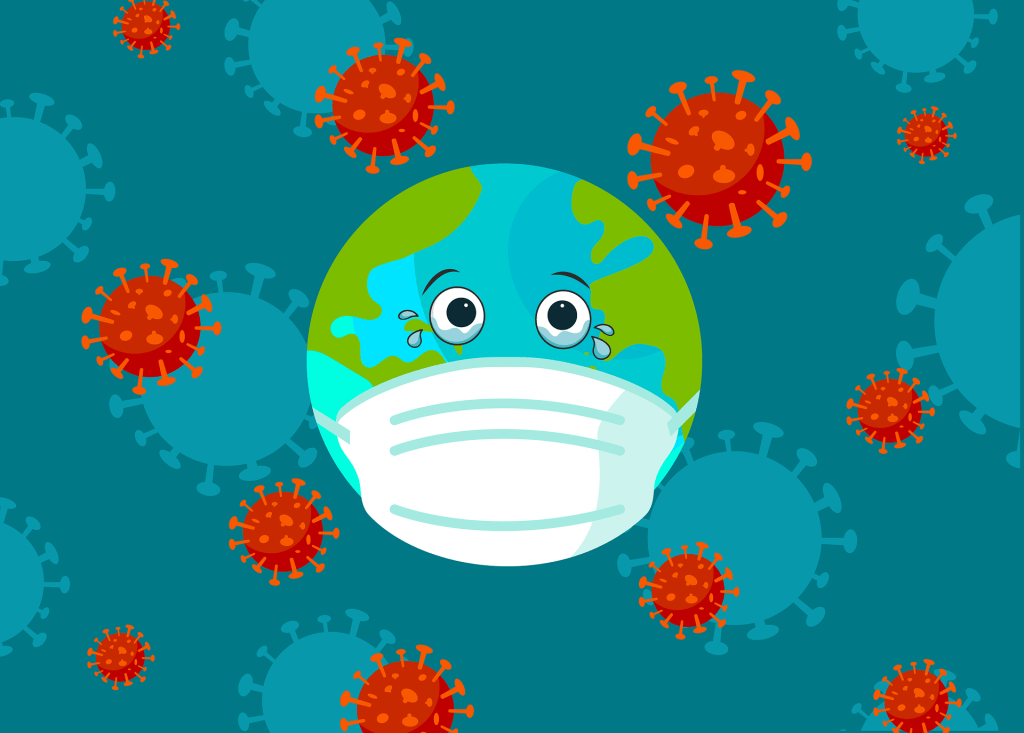
The coronavirus: A global metaphor
In cognitive linguistics there is a long-running debate about whether some metaphors are universal or near-universal or whether metaphors are more culture specific. I don’t really want to get into that controversy here, but recent work by Ahmed Abdel-Raheem made me think about it again. In this post I argue that it might be good for…
-

Genetically modified mosquitoes and creatively unmodified metaphors
Last week genetically modified (GM) mosquitoes were released in Florida. One news item reported the event as follows: “The British company Oxitec released a cloud of hundreds of millions of genetically modified mosquitoes to study how to control their reproduction and thus stop the spread of dengue, Zika, malaria, etc.” (Entrepreneur, 4 May, 2021). What type of genetic…
-

How the pandemic is shaping worldviews
This is a guest post by Ahmed Abdel-Raheem. Ahmed is a postdoc in linguistics at the University of Bremen, Germany, and former Assistant Professor at the Department of English Studies at Maria Curie-Skłodowska University in Lublin, Poland. He is the author of Pictorial Framing in Moral Politics: A Corpus-Based Experimental Study (Routledge, 2019). *** It is…
-

A new variant in covid speak
A couple of weeks ago, Andrew Reynolds alerted me to an interesting new variant in covid speak, a metaphor used by the Canadian Chief Public Health Officer Dr. Theresa Tam in the context of talking about vaccines and variants (a variant is a virus with one or two mutations). As reported by CBC on March…
-

Metaphors, metaphors, metaphors
Recently somebody asked me something about metaphor and I thought to myself, what the heck do you know about metaphor? Actually, not an awful lot, given all the stuff I have written about it, or rather the stuff that I have written which involves some sort of reference to metaphor. So, I started to make…
-

Public engagement with ‘post-normal science’
It is relatively rare, I think, for mainstream newspapers to deal with Science and Technology Studies (STS) concepts and discuss them publicly.* An article by Sonia Sodha from 20 March for The Guardian is an exception. She uses the concept of ‘post-normal science’ to try and shed some light on the vaccination debates in Europe.…
 Making Science Public